
Boke and Tsukkomi: The Funny One and the Straight One in Japanese Comedy
Boke and tsukkomi are the two roles at the heart of Japanese manzai: one says something ridiculous, the other calls it out. Here's how the pairing works and why so much Japanese comedy runs on it.
What are boke and tsukkomi?
Boke (BOH-keh) and tsukkomi (tsoo-KOH-mee) are the two roles in manzai, the Japanese comedy style where a duo trades lines in a fast, stand-up conversation. The boke says something off, silly, or just plain wrong. The tsukkomi jumps in right away to point it out and set things straight, usually with a sharp, quick retort.
Some American readers may find the pairing close to the classic funny man and straight man. The difference is that in manzai the correction is often the punchline itself, and the tsukkomi can get just as big a laugh as the boke. Many people in Japan use the words casually outside of comedy too, calling a friend's goofy remark a boke or saying someone is good at tsukkomi.
Why the setup works so well for comedy
Our read: the laughs come from rhythm and recognition. The audience knows the roles going in, so there's a small thrill in waiting for the boke to go wrong and a release when the tsukkomi says exactly what everyone in the room was thinking.
Because the format is so familiar, comedians love to bend it. Some acts build a whole routine around a tsukkomi who's a beat too late, or a boke you can't quite tell is joking or serious. Once you know the basic shape, you can start to spot how each duo plays with it.
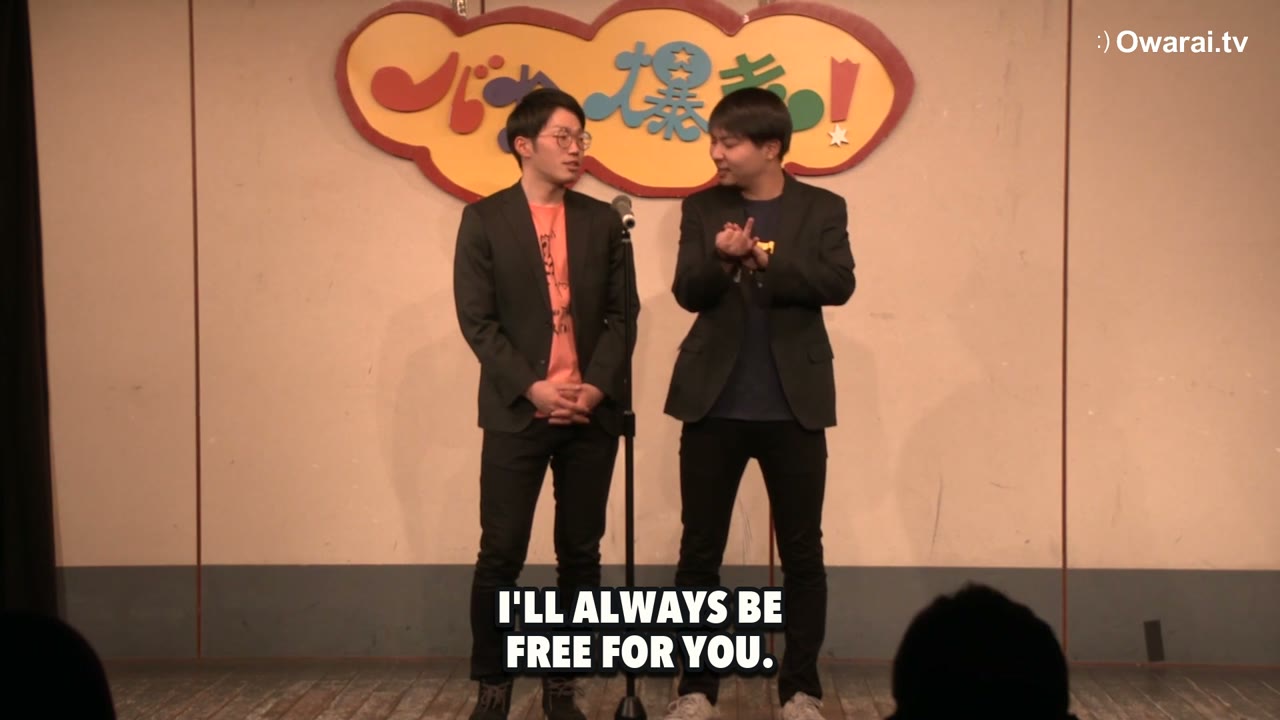 The Boyfriend Sales Pitch
A hopeful dater sweetens the pitch with every no. The friend listening won't budge.
3:36
Watch the whole thing (3:36)
The Boyfriend Sales Pitch
A hopeful dater sweetens the pitch with every no. The friend listening won't budge.
3:36
Watch the whole thing (3:36)
We use AI as part of how we create our articles.
Subtitles on this video: AI translation from the Japanese.