
What Is Flip Neta? The Japanese Comedy Bit Built on Big Sketchbooks
Flip neta is a Japanese comedy format in which a comedian reveals drawings and captions one board at a time. Here's how it works, why it gets laughs, and where to see it.
Flip Neta, Explained
Flip neta (フリップネタ) is a Japanese comedy format in which a performer works through a stack of large boards or a big sketchbook, revealing drawings or written lines one at a time and riffing on each one. "Neta" is comedy-world slang for a bit or a routine.
The format is most closely tied to pin geinin, solo comedians who perform without a partner, and it's a familiar sight in Japanese live comedy and on TV. The boards can hold almost anything: crude doodles, captions, mock charts, or a setup line waiting for a punchline.
Why a Stack of Paper Gets Laughs
In a classic Japanese comedy duo, one person drifts into nonsense and the other snaps them back. A solo comic doesn't have that second voice, so the boards set the rhythm instead. Every flip is a tiny reveal, and the laugh can land on the picture, on the line the comedian says over it, or on the gap between the two.
The handmade look matters, too. Wobbly drawings and oddly specific captions often become part of the joke, and the comedian can react to their own cards as if seeing them for the first time. Some American viewers may find it a little like prop comedy or a cue-card bit, though flip neta usually leans on drawings and words rather than gadgets.
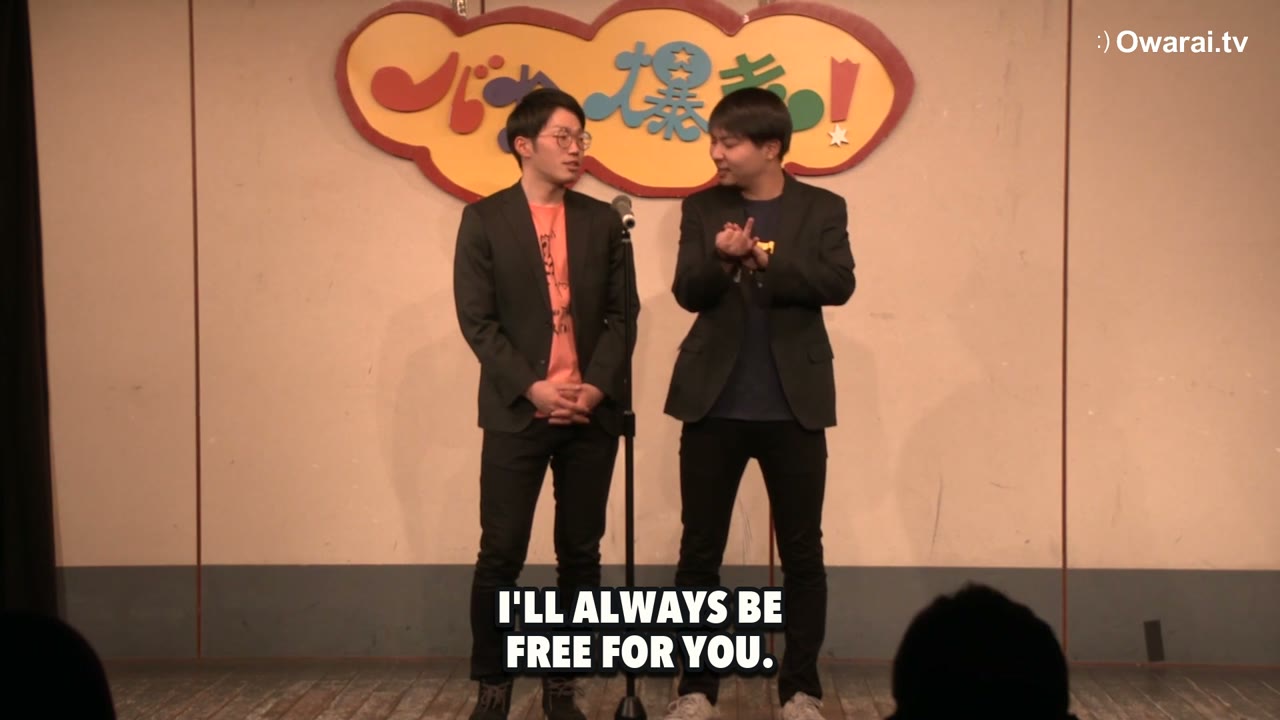 The Boyfriend Sales Pitch
A hopeful dater sweetens the pitch with every no. The friend listening won't budge.
3:36
Watch the whole thing (3:36)
The Boyfriend Sales Pitch
A hopeful dater sweetens the pitch with every no. The friend listening won't budge.
3:36
Watch the whole thing (3:36)
We use AI as part of how we create our articles.
Subtitles on this video: AI translation from the Japanese.