
How to Watch Japanese Character Comedy: Find the One Thing They Can't Let Go Of
A fixation, a blind spot, an ordinary request taken very seriously: character comedy starts with how someone sees the world. Here's what to watch for in three Japanese comedy routines.
What is character comedy?
Character comedy builds laughs around someone with a fixation, a blind spot, or a wildly wrong idea about how the world works, all played completely straight. If you've watched an American sketch about someone who takes a minor concern far too seriously, you'll recognize the appeal: the joke is as much the person as anything they say.
That approach works in staged sketches, where performers act out a scene, and in manzai, a Japanese double act with the conversational give-and-take of an American comedy duo. In either format, a character's priorities can make an ordinary encounter feel wonderfully strange before anyone delivers an obvious punchline.
Find the character's rule
Early on, ask what this person cares about most: being admired, doing a job properly, or making sure something precious gets the care it deserves. Then listen for the small choices that reveal their priorities, especially when something they consider perfectly reasonable would give anyone else pause.
The other person's response is worth following, too: a patient question, a protest, or even a moment of hesitation can show just how far apart their ideas of normal are. Posture, timing, and facial expressions help tell that story alongside the dialogue, so there's plenty to notice even if you don't catch every line.
Three routines to watch this way
"Shoplifting" by Honda Kyodai. A store clerk stops a customer whose pockets are conspicuously overstuffed, but the clerk seems more impressed than angry: the attempt is so clumsy that they're inclined to praise the customer and let them leave. Pay attention to what earns the clerk's admiration. Someone whose job is to prevent theft appears absorbed in judging the quality of the attempt, which makes this an easy way into character comedy: a familiar job, with a very peculiar person doing it.
"Booger Bomb" by Takkano. A schoolboy is jealous of Takahashi, a fast runner and popular kid in the class next door, and flicks a booger out the classroom window just as a huge explosion occurs. Watch the boy's need to make an impression on his classmates. His wounded pride gives the ridiculous setup a recognizable emotional starting point: being stuck in a classroom with someone who gets the attention you want. This is your pick if you like a solo sketch with adolescent rivalry and a healthy dose of gross-out humor.
"Taking Care of a Houseplant" by Maguro Kyodai. A building's no-pets rule has led one man to buy a houseplant instead of the dog he wanted; now he's visiting family and needs someone to look after it. This manzai routine makes an ordinary favor a way into the owner's personality. Listen to how carefully he explains the responsibility he's handing over, and how much affection sits behind the request. It's a useful companion to the other two pieces: here, you can follow a character's attachment through the details of a conversation.
On your next watch, notice what a character refuses to treat casually—and see how much that tells you about them.
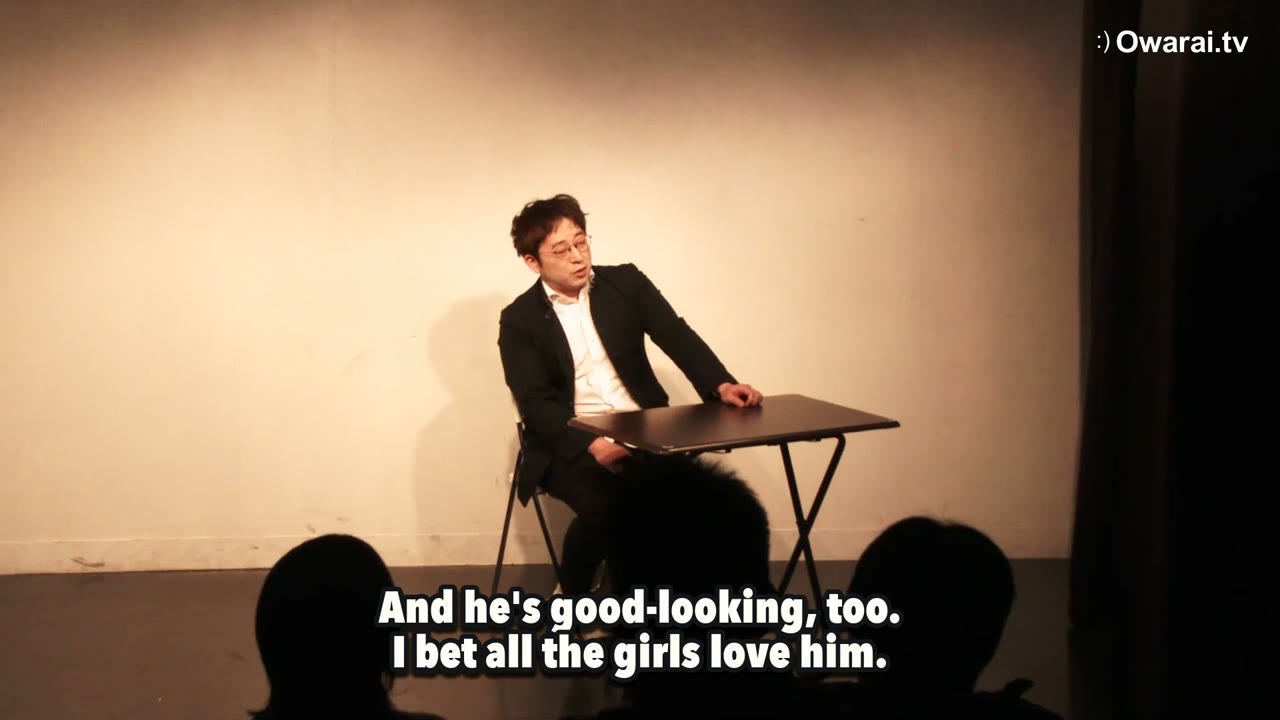 The Classroom Grudge
A jealous student has a window, a grudge, and a booger. A terrible combination.
2:27
The Classroom Grudge
A jealous student has a window, a grudge, and a booger. A terrible combination.
2:27
We use AI as part of how we create our articles.
Subtitles on this video: AI translation from the Japanese.