
Japanese Comedy About Neighbors: Sketches and Stage Routines Close to Home
From a neighbor who shows up with a dish of food to a stranger returning someone's windblown laundry, these Japanese comedy routines all start close to home. Here's what to know before you press play.
Why the neighborhood makes such good comedy in Japan
In many Japanese cities, people live close together in apartment buildings and compact residential streets, sharing hallways, stairwells and sidewalks with people they may know only by sight. Neighbors are expected to be polite, even friendly, without necessarily knowing much about each other. That mix of closeness and distance makes the neighborhood reliable territory for comedy: everyone is on their best behavior, and nobody is quite sure who they are dealing with.
The pieces below come in three forms. Manzai is a stand-up double act: one performer, the boke, says or insists on something off-kilter, and the other, the tsukkomi, reacts and pushes back. Konto is a staged sketch with characters and a scene. And a “pin” act is simply a solo performer carrying the whole piece alone.
The Laundry That Blew Away — Kanazawa TKC Factory (Pin / Solo)
It's a windy day. A man has picked up a piece of laundry that blew loose, and he has come to a unit in an apartment building to return it to the woman who lives there. On its face, it's a simple good-neighbor errand, the kind of small favor anyone might do.
Keep an eye on how he explains himself. The more carefully he reasons things out, the more closely the reasoning deserves your attention.
The Dentist — Lemon Komadori (Manzai)
The dental office in the neighborhood has closed down, and one half of the duo has taken the news surprisingly personally. They bring it to their partner with the conviction that something needs to be done about it, and that the partner should be the one to do it.
Anyone who has sat in a dentist's chair will recognize plenty of familiar details along the way. Watch the gap between how seriously the boke treats the situation and how the tsukkomi receives it.
Bitten on the Arm — Ponpoko (Manzai)
The boke opens with a strange story from the neighborhood involving an older man they have never met, and they are not ready to let it go. They have come to the tsukkomi for advice on getting even, and they already have a plan in mind.
Much of the routine is a consultation, so the fun is in the back-and-forth: watch how the boke lays out the plan piece by piece, and how the tsukkomi takes each part of it.
I Made Too Much — Rinrin Parker (Konto)
A woman who lives next door comes over with a dish of food and a familiar line: “I made too much.” In Japan, sharing extra food or gifts with the people around you is a common custom with its own name, osusowake. The line also carries a wink for Japanese audiences, because a neighbor showing up with leftovers and “I made too much” is a stock way for a romance to begin in Japanese TV dramas and manga.
Watch how the same exchange comes around more than once, and how each visit plays off the one before it.
Where to go next
If the manzai pieces caught your interest, a primer on the boke and tsukkomi roles will help you catch more of the rhythm between the two performers, and a guide to everyday customs like osusowake fills in the neighborly background. Each act also has its own performer profile, a good next stop if one of these becomes your first.
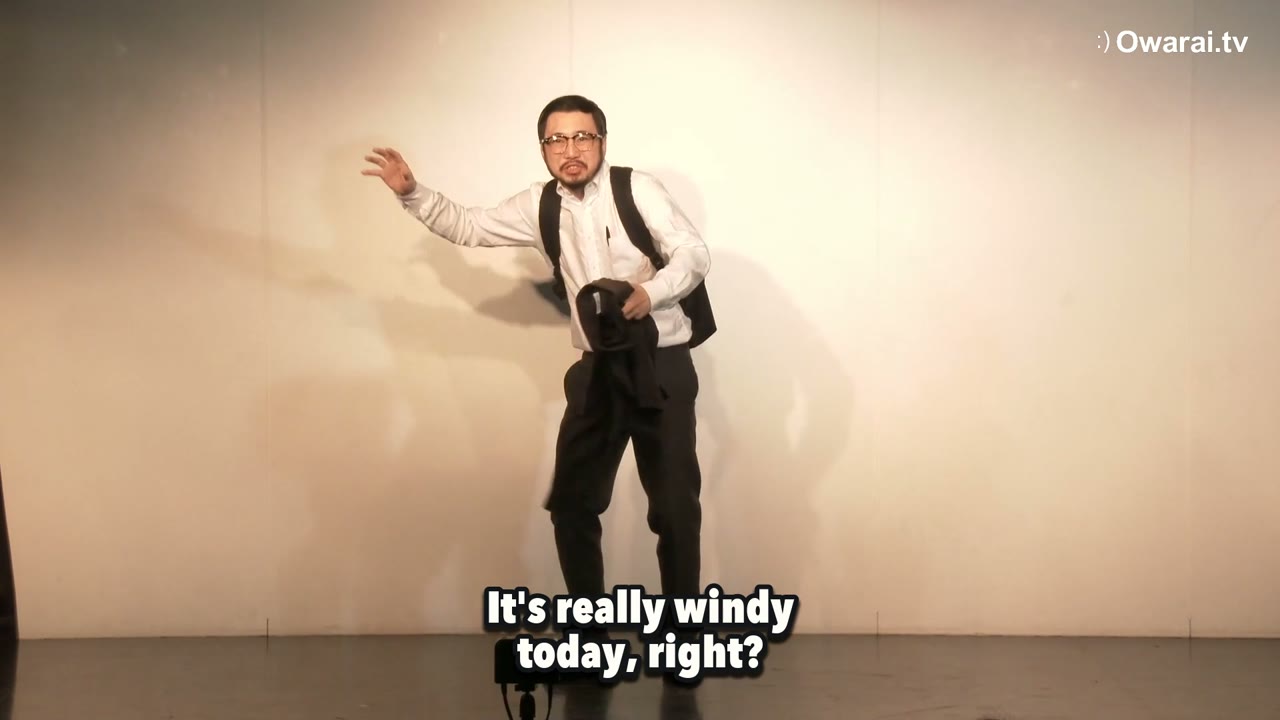 Is This Your Laundry?
A stranger returning windblown laundry can't seem to make the visit sound normal.
2:56
Is This Your Laundry?
A stranger returning windblown laundry can't seem to make the visit sound normal.
2:56
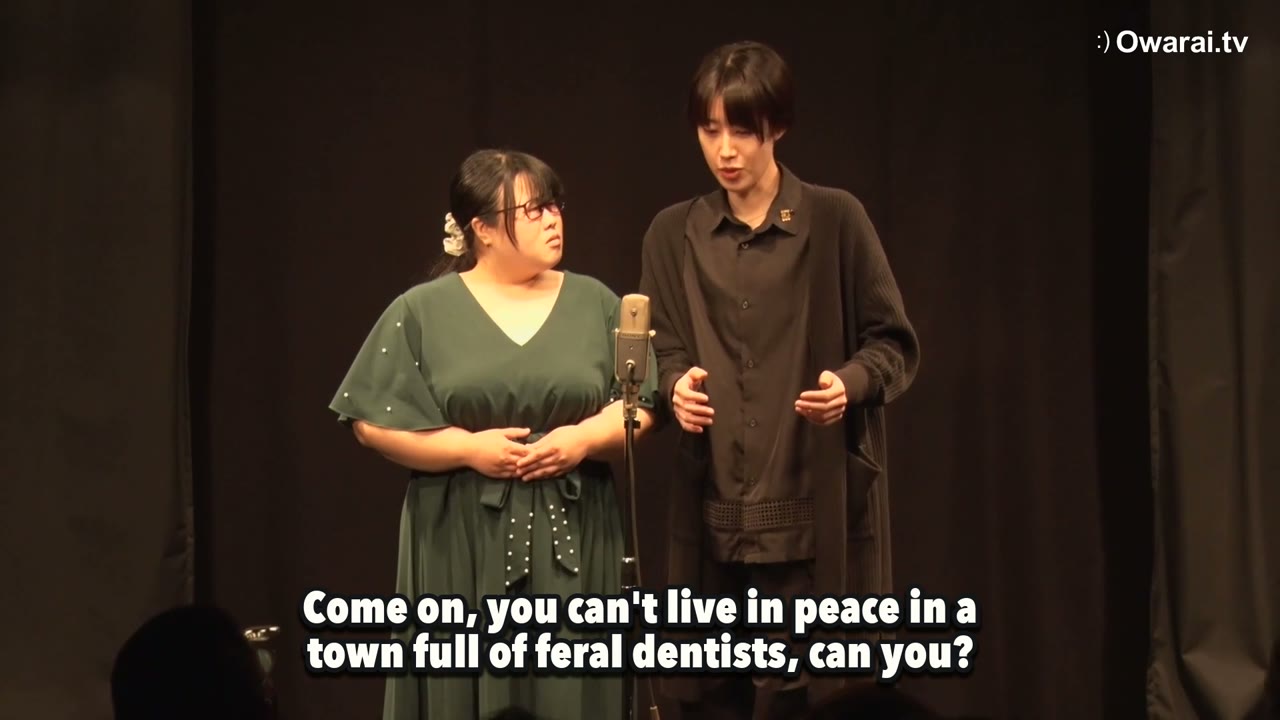 The Dentist's Office Closed
The dental office closed. The worry about the dentist is getting out of hand.
3:46
The Dentist's Office Closed
The dental office closed. The worry about the dentist is getting out of hand.
3:46
We use AI as part of how we create our articles.
Subtitles on this video: AI translation from the Japanese.