
Japanese Comedy About Work: Deadlines, Job Interviews, and Life on the Clock
From a group interview in a jobless near-future to a poster that's due tomorrow, these Japanese comedy pieces find the funny in working life. Here's what to know before you press play.
Why work is such fertile ground for Japanese comedy
Search for Japanese workplace comedy and you'll quickly find that the office is only part of the picture. For many people in Japan, working life begins with a highly structured job hunt: college students apply to companies during the same season, often sitting through several rounds of interviews before landing their first job. Once they're in, a clear chain of command shapes the day, from who hands out assignments to who signs off on them.
That mix of pressure, routine, and hierarchy makes work a natural stage for comedy. The pieces below cover a lot of ground: a looming deadline, a frantic morning, a complaint to a supplier, a job interview, a train ride, and even a detour into Japanese history. You'll find solo acts, a two-person sketch, and manzai, Japan's classic two-person stand-up format.
Inside the Mind of a Woman on Deadline — Kinoko-chan (solo)
An office worker finds out that the poster design she's responsible for is due tomorrow. She knows exactly what she needs to do: sit down and come up with an idea.
Anyone who has ever had a deadline sneak up on them will recognize the territory. Pay attention to her body and facial expressions as much as the words, since so much of this solo piece lives in one character's head.
Overworked — Kanazawa TKC Factory (solo)
A company employee jolts awake, convinced he has overslept and is about to be late for work, and the panic sets in immediately.
The whole piece is built on repetition, so it rewards close attention: notice what comes back each time and how each round pushes a little further than the one before.
The Paint Rich People Love — Arizona Baseball School (sketch)
A painting contractor confronts the sales rep who sold him his paint. His employees have been having health problems, he's convinced the paint is to blame, and he wants answers.
This is a two-person standoff from start to finish. Watch how each side holds its ground, and listen for a line that keeps returning.
Employment Ice Age — Daiki Toyao (solo)
In a near-future Japan where the employment rate has fallen below one percent, a group of job seekers gathers for the 100th round of group interviews, and the company's president walks in to run it.
Two bits of background help here. The "employment ice age" is the name Japan gives to the stretch from the late 1990s to the early 2000s, when companies hired very few new graduates. And group interviews, in which several applicants are questioned at the same time, are a common step in Japanese new-graduate hiring.
Keep an eye on the dynamic between the person in charge and the people hoping to get through the door, and on the patterns that repeat.
The Big Fart — Ohayo Wayama (solo)
Not every workplace is an office. A train comes to an emergency stop, and an announcement over the PA explains why. One passenger has a very personal stake in what's being said.
As the title suggests, expect bathroom humor. Pay attention to the back-and-forth between the passenger and the voice coming over the speakers, which carries the whole piece.
Ino Tadataka — Mujinzo (manzai)
This manzai act restages the surveying journey of Ino Tadataka, the Edo-period figure who traveled across Japan on foot, measuring as he went, to produce an accurate map of the country. The shogunate, the samurai government that ruled Japan at the time and was headed by the shogun, assigns him companions for the trip.
It's a history lesson turned into a story about the people you end up working with. Watch how the relationships within the group shift as the long journey goes on.
Where to go next
If one of these pieces leaves you curious, guides to Japanese job hunting and to the Edo period are a good next step. Each performer's profile is also the place to start exploring more of their work.
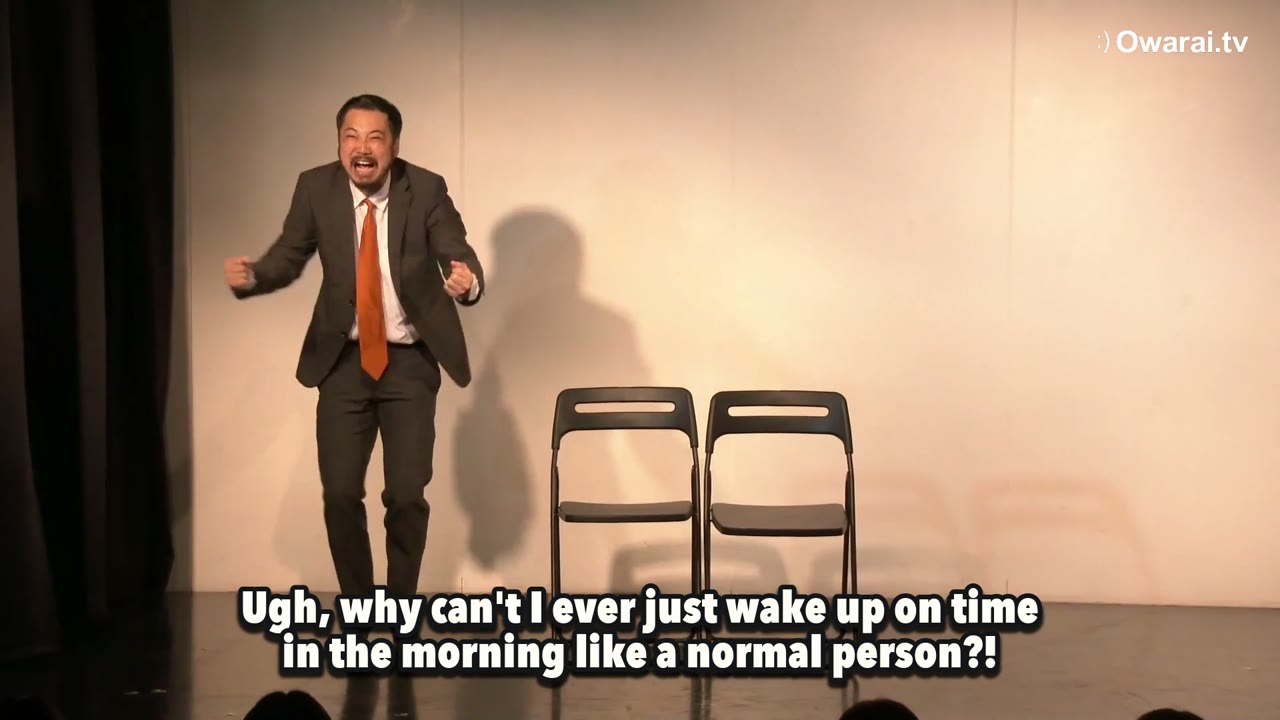 The Morning Panic
Waking up late becomes a fresh emergency every time.
3:33
The Morning Panic
Waking up late becomes a fresh emergency every time.
3:33
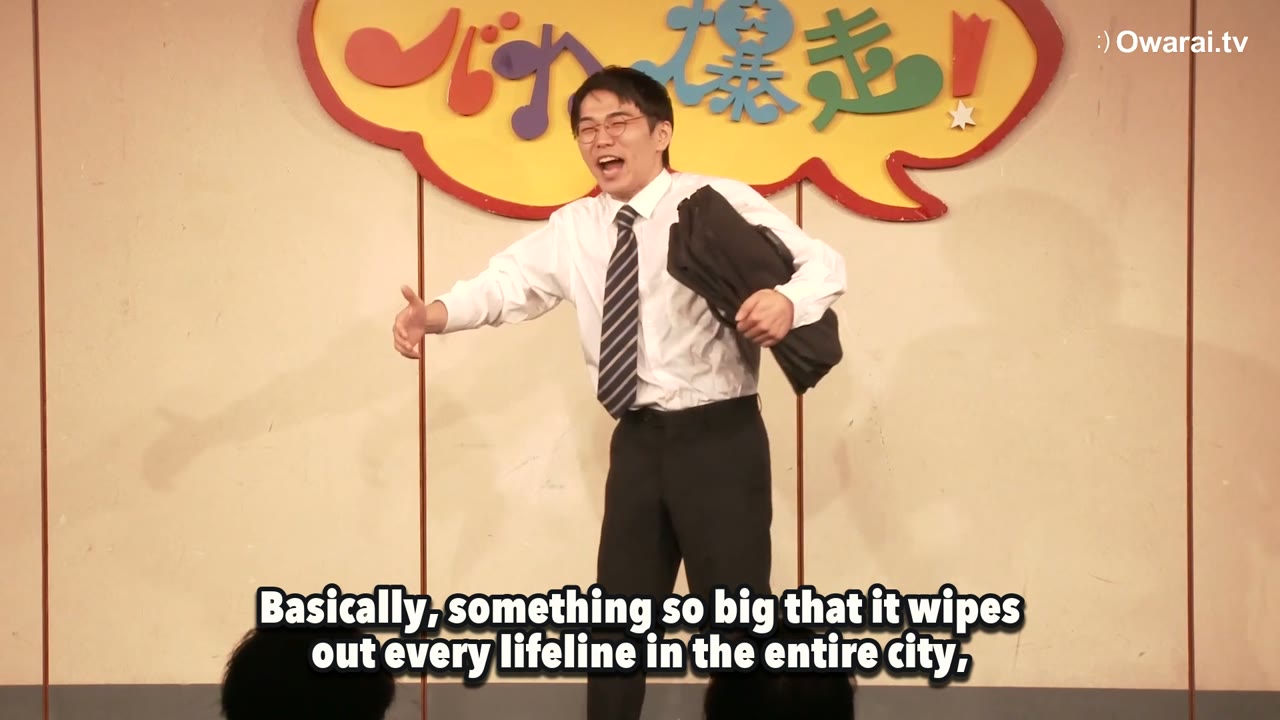 Talking Back to the Train
A commuter keeps talking back to the PA system as if it owes a personal explanation.
4:03
Talking Back to the Train
A commuter keeps talking back to the PA system as if it owes a personal explanation.
4:03
We use AI as part of how we create our articles.
Subtitles on this video: AI translation from the Japanese.