
How Live Shows, M-1, and TV Connect in Japanese Comedy
Explore the auditions, contest rules, and performance choices behind Japanese comedy through official records and comedians’ own accounts.
The connections run in several directions
The routes between live shows, contests, and television in Japanese comedy run in several directions. A talent agency can audition performers for its own shows, and a theater can host a live TV broadcast. Competition results can also draw audiences to live performances, as one comedian said in an interview.
How does a performer get onto an agency bill?
An agency show is a live comedy event produced by a talent agency. In a December 2024 audition announcement, Ohta Production described a route from document screening to a performance audition, with successful applicants appearing in an agency-produced show. That audition has closed; the stated outcome was a live appearance, without a promise of agency representation.
Ohta Pro Entertainment College, the agency's training school, describes another route in its materials for the 2027 academic year. All students perform in an internal showcase. From September onward, high-performing students can be recommended for agency shows alongside more experienced comedians. The school says television program staff attend those shows to look for talent.
What changes when an act has the whole show?
In an interview, Melody Kobayashi of Buriki Karasu described the difference between sharing an agency bill and having a show devoted entirely to Buriki Karasu. On the shared bill, audience attention spread across different performers. At their own show, that attention concentrated on them. Kazuki Kuroda added that this brought pressure to make the show work entirely through their own performance.
Kobayashi also described a show run by talent agency Shochiku Geino where writers selected the performers without an audience vote. Kuroda said this produced a different mix of acts from the usual agency shows. Their account captures two distinct ways of assembling a lineup within that agency at the time.
Where does M-1 fit?
M-1 Grand Prix is a contest for manzai, a Japanese comedy form. According to its official 2026 entry rules, professional status and agency representation were not requirements, but entries had to include at least two performers; solo acts were excluded. Registration for that edition has closed.
The 2026 rules set specific time limits: two minutes in the first round, three minutes in rounds two and three, and four minutes in the quarterfinals, semifinals, wild-card round, and final.
The contest also has a direct organizational connection to television. Its official entry page lists broadcaster ABC TV and entertainment company Yoshimoto Kogyo as joint organizers.
How do stage work and television connect?
Yoshimoto Kogyo's corporate history gives an example from Osaka. A theater the company opened in 1986 provided a stage for emerging comedians, including graduates of its comedy school. A live television program began broadcasting from the theater the following year.
Television exposure could be felt offstage, too. In the same interview with Buriki Karasu, Melody Kobayashi recalled being recognized on the street after appearing on a television storytelling program. Passersby said they had watched the broadcast.
The Japan Arts Council's undated educational history of manzai describes another connection: comedy duos in Tokyo who became known through television joined the Manzai Association, a performers' organization, and continued appearing onstage.
How do competitions influence live shows?
In an interview, one comedian spoke about comedy contest results broadly: stronger results had helped sell live-show tickets and seemed to be changing how others saw the performer, even though the work itself had not changed.
Competitions could also influence what went into a show. In an interview, Hamabe no Wolf recalled developing material for the previous year's show with the R-1 comedy competition in mind. For the show being discussed in the interview, the performer wanted to pursue material that was not designed for contests.
Hamabe no Wolf had previously removed elements from routines because they seemed difficult to use on television or unsuitable for competitions, but had begun questioning whether those restrictions were necessary. The new material, the performer said, could only be performed and experienced live.
What to notice in the next clip
When a clip identifies its original setting, notice how the routine uses the time available. A contest entry and a performance from an act's own show may reflect different choices about what to include.
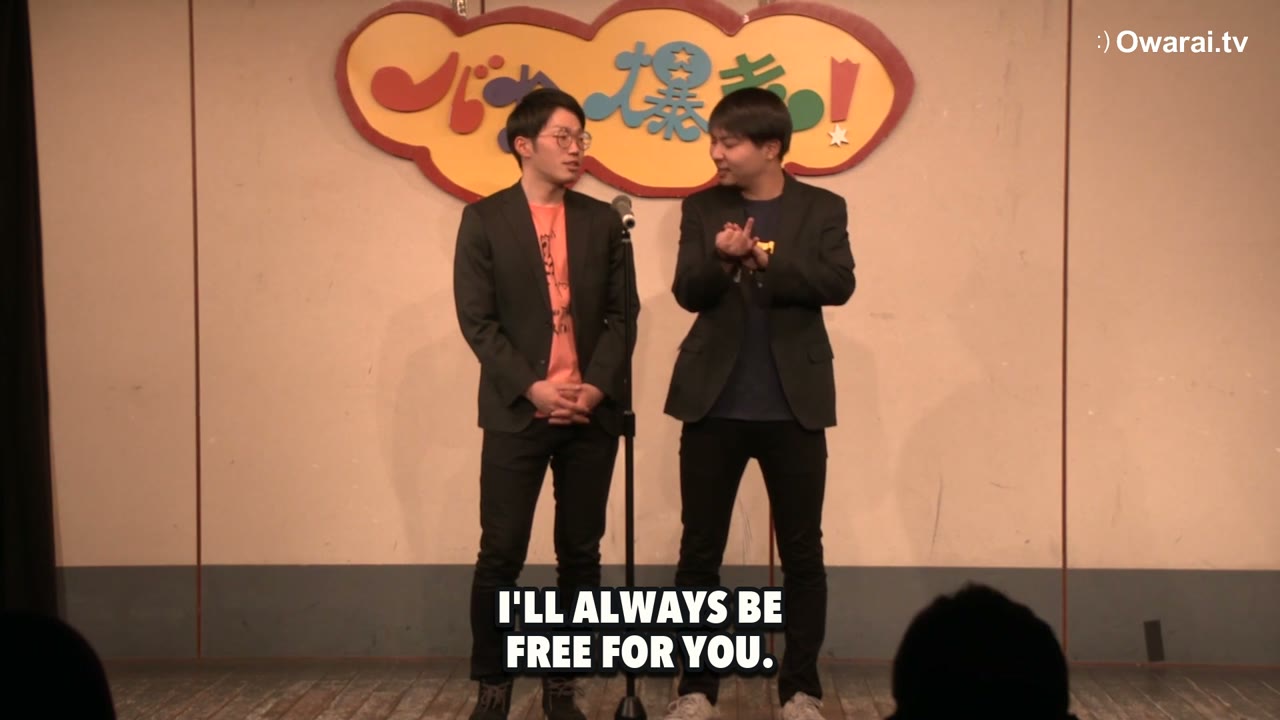 The Boyfriend Sales Pitch
A hopeful dater sweetens the pitch with every no. The friend listening won't budge.
3:36
Watch the whole thing (3:36)
The Boyfriend Sales Pitch
A hopeful dater sweetens the pitch with every no. The friend listening won't budge.
3:36
Watch the whole thing (3:36)
We use AI as part of how we create our articles.
Subtitles on this video: AI translation from the Japanese.