
Japanese Comedy About Parents and Kids: Six Sketches and Stage Routines
Six Japanese comedy pieces about parents and kids, from an apology at a convenience store counter to a samurai dad at a school sports day. Get the setup and background before you press play.
Family, the setting everyone already knows
Every family runs on a script. Parents lecture, kids roll their eyes, somebody has to apologize for something, and everyone more or less knows their lines. That makes family a natural setting for comedy, because the audience already knows how the scene is supposed to go.
The pieces below all start from a parent and a child. Some of the settings are specific to Japan, like a school sports day or the country's best-known folktale, and we'll fill in those details as we go. Others, like an awkward apology at a convenience store or a tense trip back to the family home, need no introduction.
You'll see three formats. Manzai is a duo routine, usually with one partner as the boke (the one who says the odd things) and the other as the tsukkomi (the one who calls them out). A sketch, or konto, is an acted-out scene with characters. A solo act, or pin, is one performer carrying the whole piece.
I Want My Dad to Yell at Me — Galoin (Manzai)
In this routine, one member of Galoin has a small, oddly specific wish. Just once, they'd like to hear their dad tell them to go study. So the partner agrees to play the father, and the routine turns into a little acted-out scene with a dad and a son.
Manzai often steps into a mini-sketch like this one. Watch for the gap in energy between the one who wants the lecture and the one who has to deliver it.
Back Home — Ponpoko (Manzai)
The Japanese title, jikka, means the house you grew up in, your parents' place. The boke in this routine is too embarrassed to say “thank you” to their parents, and every visit home ends in a big fight.
To break the cycle, the boke decides to rehearse going home. The tsukkomi has to play Mom, and the boke plays the daughter.
Pay attention to what the boke, now playing the daughter, does with this second chance, and listen for lines that come back more than once.
Where to go next
Start with whichever family situation feels most familiar, then work your way toward the ones rooted in Japanese traditions. The profiles of Burrows, Galoin, Ponpoko, Yonbun no San, Daiki Toyao, and Sushi Sasaki are the place to find more of their work.
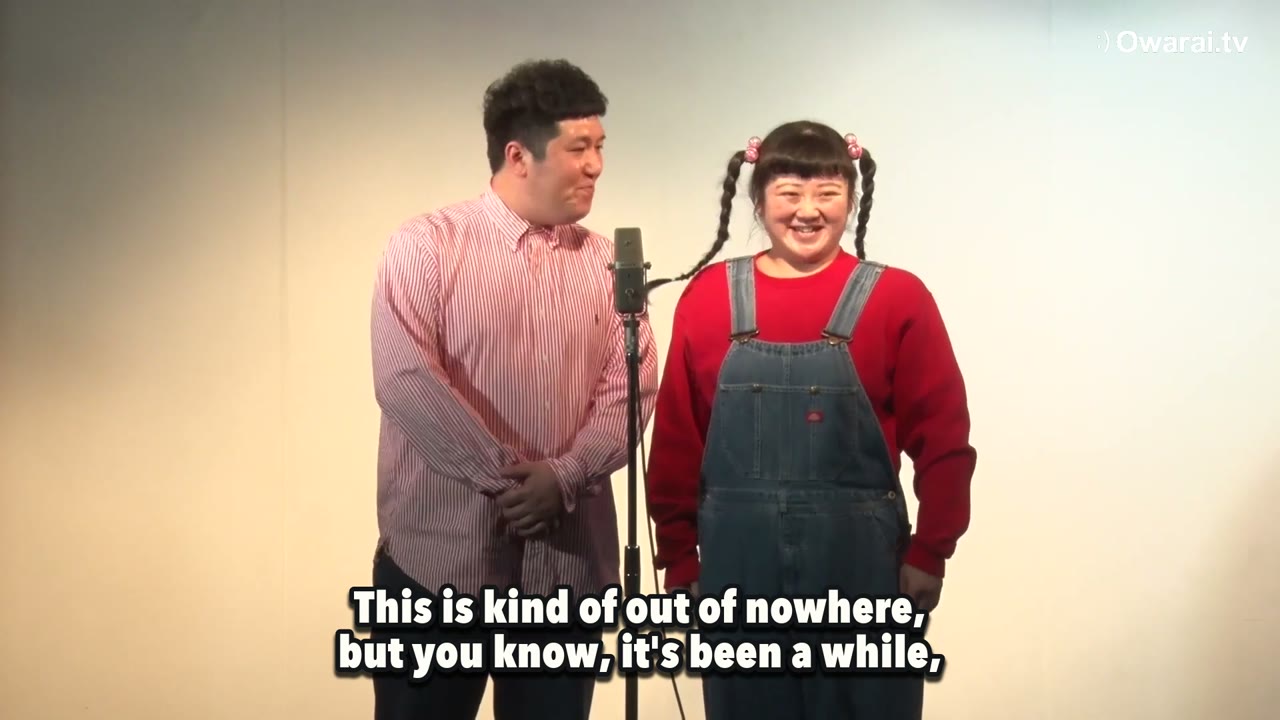 Practicing a Visit Home
A practice visit home is supposed to prevent a fight. Being polite is the hard part.
4:34
Practicing a Visit Home
A practice visit home is supposed to prevent a fight. Being polite is the hard part.
4:34
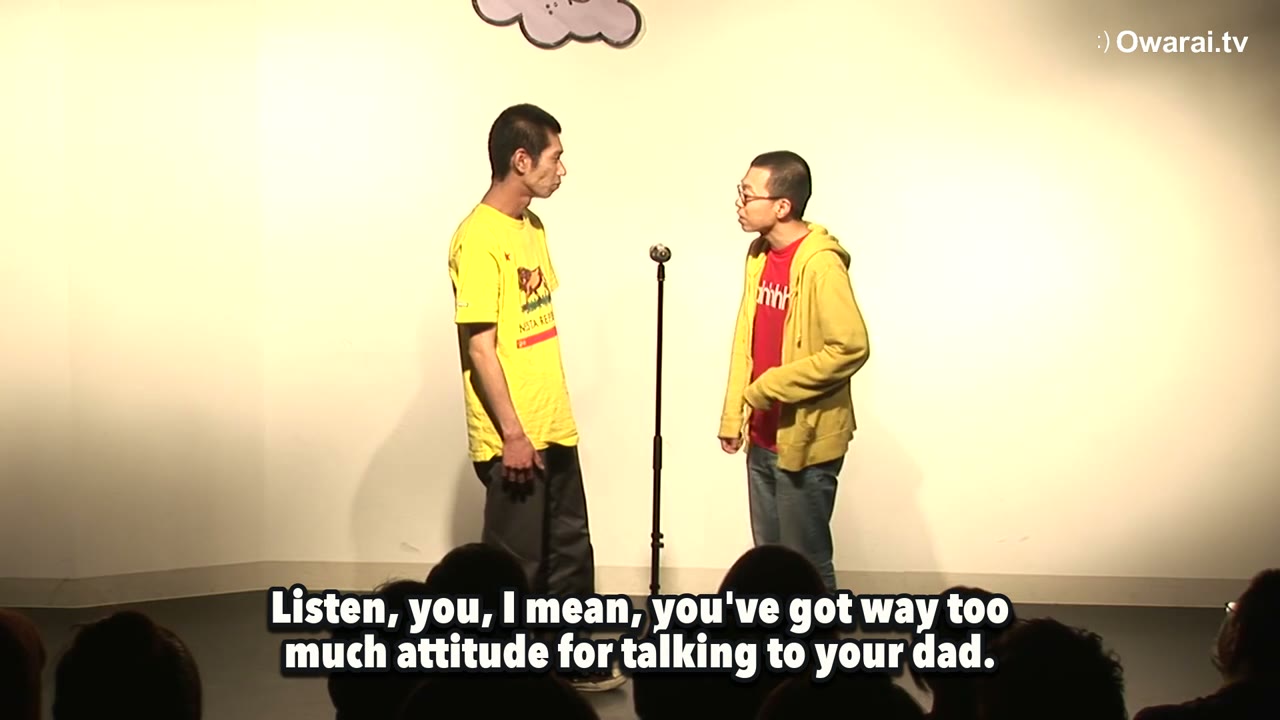 Please Tell Me to Study
Playing Dad means trying to lecture a teenager who keeps derailing the conversation.
3:34
Please Tell Me to Study
Playing Dad means trying to lecture a teenager who keeps derailing the conversation.
3:34
We use AI as part of how we create our articles.
Subtitles on this video: AI translation from the Japanese.