
Watching Japanese Comedy in English: What Subtitles and Dubbing Help You Catch
A repeated phrase, a quick comeback, a change in tone: translation helps these details come through. Here’s what to watch for in three Japanese comedy performances.
The words are only part of the exchange
Watching Japanese comedy in English means following both what a line says and what it does: a complaint, a correction, and a sales pitch can describe the same situation while putting very different pressure on the listener. Translation helps preserve that distinction by keeping repeated wording consistent, comebacks brief, and differences in tone clear.
Subtitles let you hear the original delivery while reading; dubbing lets you follow the dialogue in English with more attention available for faces and gestures. The picks below include sketch comedy and manzai, a two-person comic exchange with something of the back-and-forth you might recognize from an American comedy double act.
Listen for what stays the same—and what changes
Start by getting your bearings: who wants something, who has to respond, and what each person thinks this conversation is about. When a phrase comes back, notice how its surroundings change; keeping the English wording steady can make those differences easier to catch.
Give the replies as much attention as the longer speeches, since a few words can carry disbelief or irritation without spelling out everything that is wrong. If someone sounds unusually formal, blunt, or casual, treat that as part of the characterization: the way a person addresses someone can tell you as much about their relationship as the information they exchange.
Three performances to watch with that in mind
Honda Kyodai — “Shoplifting” (sketch comedy). A store clerk stops a customer for shoplifting. Pay attention to how the clerk talks about the theft itself: how does each remark fit your expectations of someone enforcing a store’s rules? Follow the dialogue alongside the performers’ movements and expressions, without assuming either tells the whole story. This is a useful starting point because the encounter is immediately recognizable, leaving you free to notice what the clerk’s choice of words adds to it.
Leadoff Man — “I Want a Girlfriend” (manzai). A man frustrated by his unsuccessful search for a girlfriend talks to a friend he has known since high school. Focus on how he presents his dating problem to someone who already knows him, and how that friend responds. It’s a useful pick for hearing the difference between the urgency of a request and the brevity of an answer. If LINE comes up, all you need to know is that it’s a messaging app; keep your attention on the conversation.
Camel — “Hair Removal Salon” (manzai). One performer, whose beard is getting thicker, wants to practice a trip to a hair-removal salon and asks the partner to play a female staff member. Catch the instruction to keep the role-play casual: how seriously does each participant think this rehearsal should be taken? That small question gives you something specific to follow in the wording and delivery. Start here to notice how everyday language carries expectations about another person’s effort.
On your next watch, pick one detail—wording, replies, or tone—and see what it helps you notice.
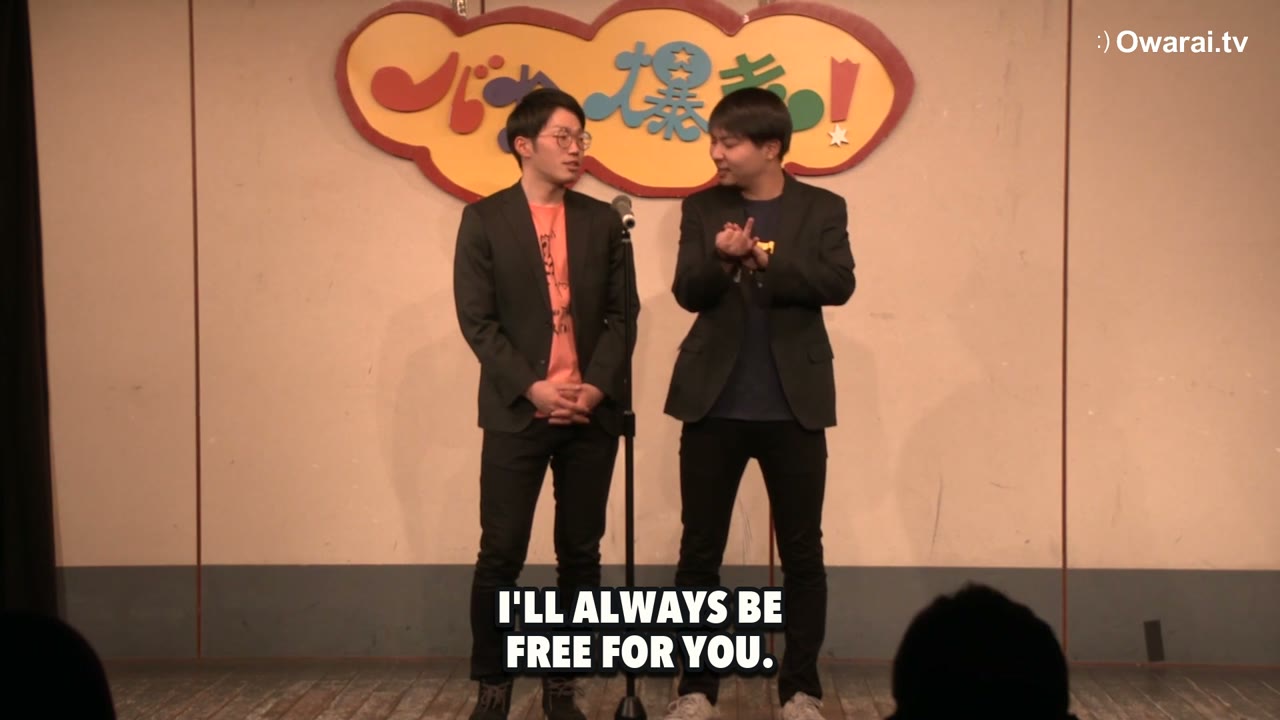 The Boyfriend Sales Pitch
A hopeful dater sweetens the pitch with every no. The friend listening won't budge.
3:36
The Boyfriend Sales Pitch
A hopeful dater sweetens the pitch with every no. The friend listening won't budge.
3:36
We use AI as part of how we create our articles.
Subtitles on this video: AI translation from the Japanese.