
Japanese Comedy About Family Life, From Grandparents to Little Sisters
Japanese sketches and stage routines about family life feature a grandson visiting his grandfather, an older sister with magical powers handing off her wand, and a man sharing stories about his wife and kids. Here's what to know and watch for before you press play.
Why Family Makes Such an Easy Stage for Comedy
Family is one of the most dependable settings in comedy anywhere. Everyone already knows the roles: the big sister, the grandparent, the relative who can't stop talking about their kids. So a performer needs only a line or two to set the scene, and the audience fills in the rest. The pieces below each start from a situation like that, familiar enough that you can settle in right away.
They come in two formats. Manzai is a duo act in which one performer, the boke, drives the bit while the other, the tsukkomi, reacts and pushes back. What Japanese comedians call a "conte" is closer to what Americans would call a sketch: the performers play characters inside a scene.
"Grandpa" — Pabun (manzai)
A grandson who is in the middle of studying for entrance exams drops by his grandfather's house for the first time in a while. That's the whole setup, and it's all you need going in.
Keep an ear out for phrases that come back more than once. In this routine, the repetition is part of the structure.
Before You Press Play
If you want more background first, a closer look at how manzai duos split the boke and tsukkomi roles is a good next step. You can also start with the profiles of Pabun, Daydream, and Naniwa Platic to get to know each act.
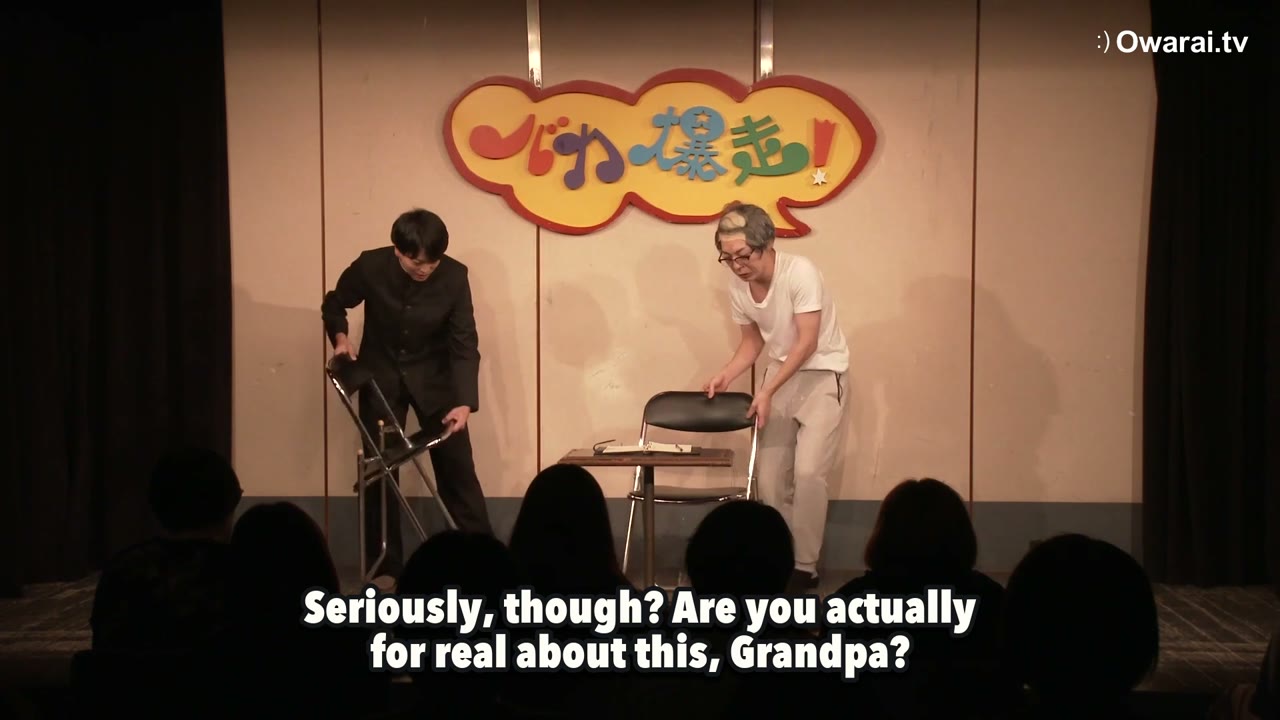 A Visit to Grandpa's
A student tries to reason with Grandpa about college. Grandpa won't budge.
3:19
A Visit to Grandpa's
A student tries to reason with Grandpa about college. Grandpa won't budge.
3:19
We use AI as part of how we create our articles.
Subtitles on this video: AI translation from the Japanese.