
Physical Comedy in Japanese Sketches: What to Watch For
A character’s movements and expressions can give you another way into a joke. Here’s how to watch for them in three Japanese comedy sketches.
What is physical comedy?
Physical comedy makes a gesture, an expression, or a change in posture part of the joke, whether or not anyone is speaking. If you enjoy sitcom reaction shots or slapstick routines, you already have a useful way into the Japanese sketches below. These are short, scripted scenes with characters and a setting, much like the sketches familiar to American audiences. Think of the physical performance as another part of the conversation: alongside what a character says, you can follow how the performer gives that character’s feelings and intentions a visible shape.
Follow what each character wants
Start with what each character wants from the situation, then watch both the person speaking and the person listening. Notice what draws your attention—a face, a movement, or a pause—and consider what it adds to the exchange. If a gesture repeats, watch its timing and the situation around it: a familiar movement can take on a different meaning once you know more about the character. When watching with subtitles, glance back at the performers between lines; their expressions and movements give you another part of the scene to enjoy.
Three sketches to watch this way
**“Shoplifting” — Honda Kyodai.** Ayano Honda and Anitaro perform under a name that means “the Honda siblings.” A store clerk stops a customer whose pockets are stuffed full of stolen goods, but the clerk is fascinated by how bad the customer is at shoplifting and would rather praise them than scold them. Keep your eyes on the clerk, and watch how the two performers play off each other during this peculiar encounter. Start here for a familiar situation with an unusual focus: the employee’s interest in the customer’s terrible technique.
**“Booger Bomb” — Takkano.** A boy in class is jealous of Takahashi, a student in the next class who’s fast and a hit with the girls. When the boy flicks a booger out the window, an explosion happens at the same moment. Takkano performs the sketch solo, so watch how much of the boy’s jealousy comes across through facial expressions and movement alongside the dialogue. Try this one for a single performer’s take on a familiar feeling: resenting the person who seems to get all the attention.
**“My Son’s Drawing” — Baioni.** Kosuke draws a portrait of Miki, the girl sitting next to him in art class, and makes her cry, so his father gets called in to the school. The school asks the father, a professional portrait artist, to draw a picture of Miki that won’t upset her. Watch the father as he takes on that request, and keep an eye on both performers’ faces during the meeting. Choose this one for the awkwardness of a very specific assignment: capturing a likeness while considering someone’s feelings.
In your next sketch, give the movements and expressions as much curiosity as the words.
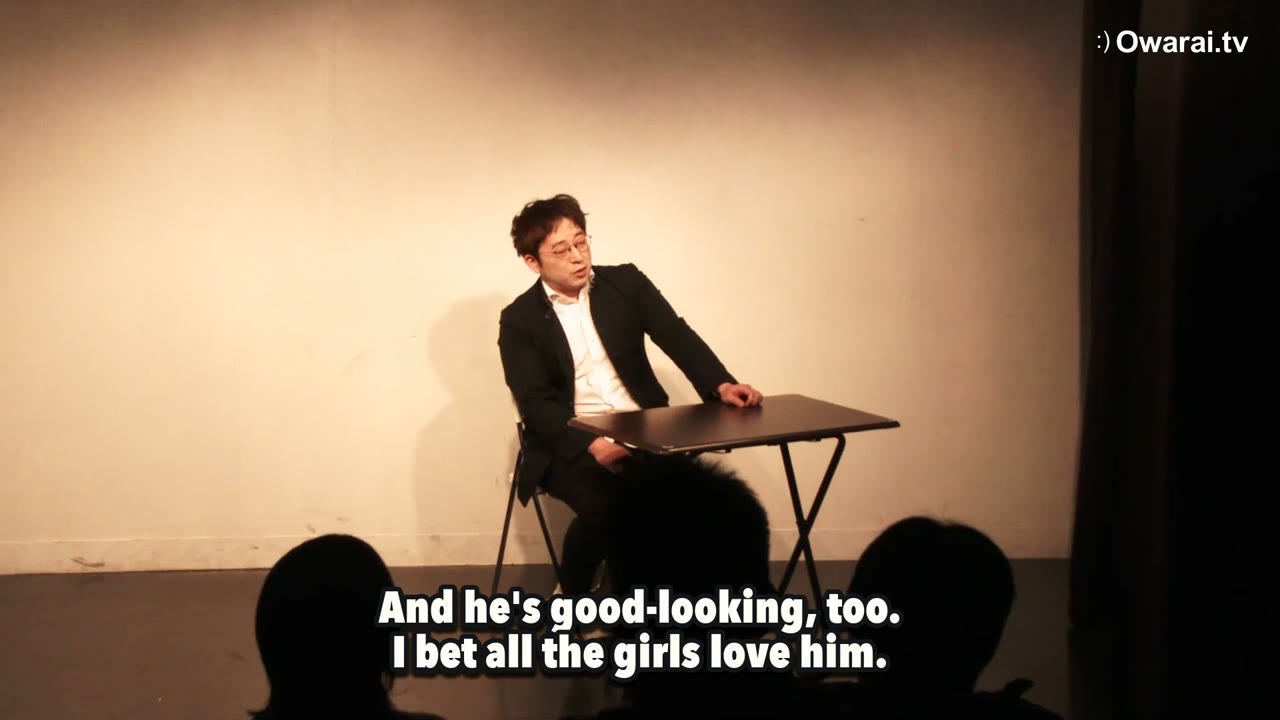 The Classroom Grudge
A jealous student has a window, a grudge, and a booger. A terrible combination.
2:27
The Classroom Grudge
A jealous student has a window, a grudge, and a booger. A terrible combination.
2:27
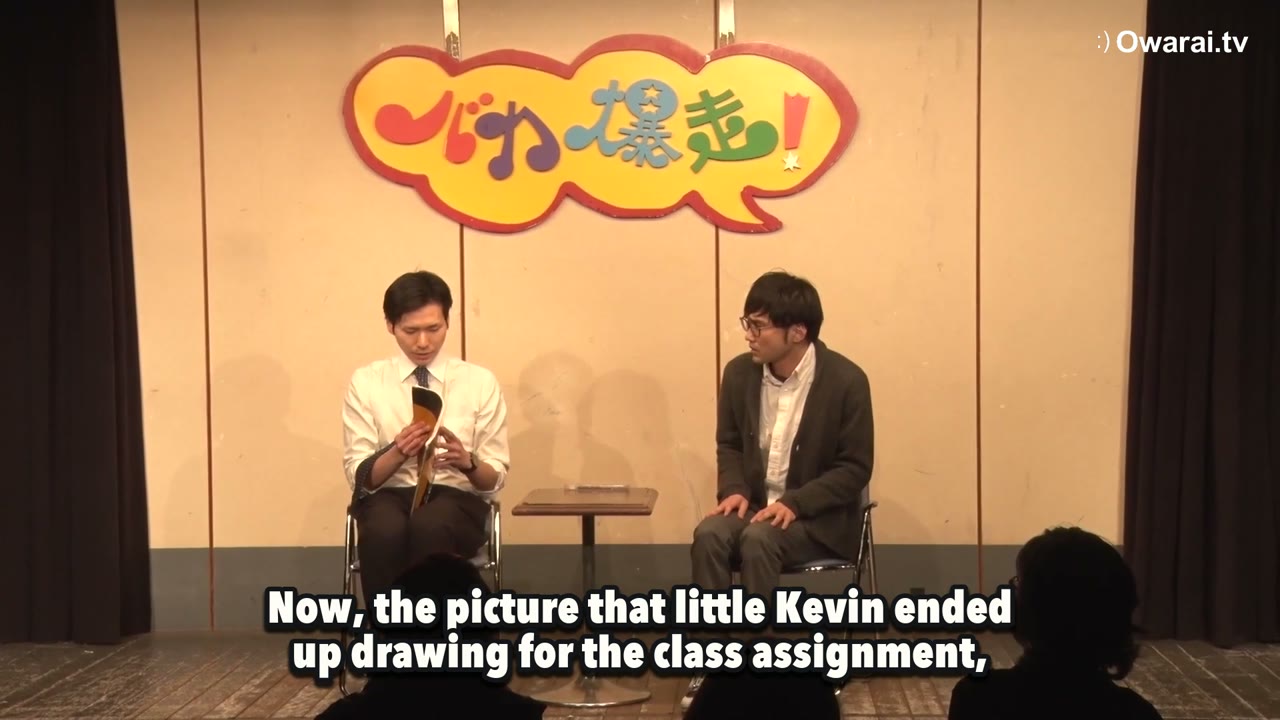 In Trouble Over a Drawing
A dad gets called in to school after his son's drawing of a classmate makes her cry.
5:17
In Trouble Over a Drawing
A dad gets called in to school after his son's drawing of a classmate makes her cry.
5:17
We use AI as part of how we create our articles.
Subtitles on this video: AI translation from the Japanese.