
Watching Japanese Stage Comedy: Listen to the Room
When a comedy recording includes audience laughter, there’s more to hear than the punchlines. Listen for the space around each exchange, then try that approach with three Japanese comedy duos.
The space around the joke
When you watch a recording of a stage act, the space around the dialogue can be part of the pleasure: a thought hangs there, a reply cuts in, or a laugh keeps a moment alive. If audience laughter is audible, listen to where it begins and fades in relation to the performers’ words, much as you might with a stand-up special.
Two formats appear in these selections: a comedy double act, built around a pair’s verbal exchanges, and a sketch, in which performers play characters in a situation. In either format, timing includes how much room a line or reaction gets, whether the exchange moves quickly or leaves you waiting for an answer.
Keep an eye on the person listening
Let the opening establish who’s speaking, what they want, and what would count as a normal response; those details give you something to measure the next exchange against. If you hear the audience laugh, notice whether the next line arrives during the laughter or after it subsides, and consider how that changes your sense of urgency.
During a pause, try shifting your attention to the person who isn’t speaking, especially if subtitles have kept your eyes at the bottom of the screen. We like watching for who seems to need an answer right now and who seems comfortable waiting: it gives even a quiet moment something to look for.
Three acts to try
"Shoplifting" — Honda Kyodai (sketch). A store clerk stops a customer for shoplifting, putting a familiar confrontation in motion. Start with the clerk’s attitude: what does this person seem to want from the encounter, and how does that fit your expectations of the job? Keep an eye on the customer while the clerk speaks, too. The appeal of starting here is that the situation needs little explanation, leaving you free to notice what a response—or the wait for one—adds.
"I Want a Girlfriend" — Leadoff Man (comedy double act). A man who hasn’t had any luck finding a girlfriend brings his frustration to a friend he’s known since high school. Focus on how much importance he puts on solving his dating problem, with all that shared history sitting behind the conversation. Listen to where his friend enters the exchange: the speed of a response can suggest patience, disbelief, or familiarity. Start here for the tension between a pressing personal problem and an old friendship.
"Hair Removal Salon" — Camel (comedy double act). One performer’s beard has been getting thicker, so he wants to practice a visit to a hair removal salon and asks his partner to play a female staff member. Keep the rehearsal itself in view: how seriously does each person think a pretend appointment should be taken? That question gives you something to follow alongside the customer-and-staff setup. Watch for what their delivery suggests about the effort they expect from each other.
On your next watch, give the pauses a little attention and hear what they add to the conversation.
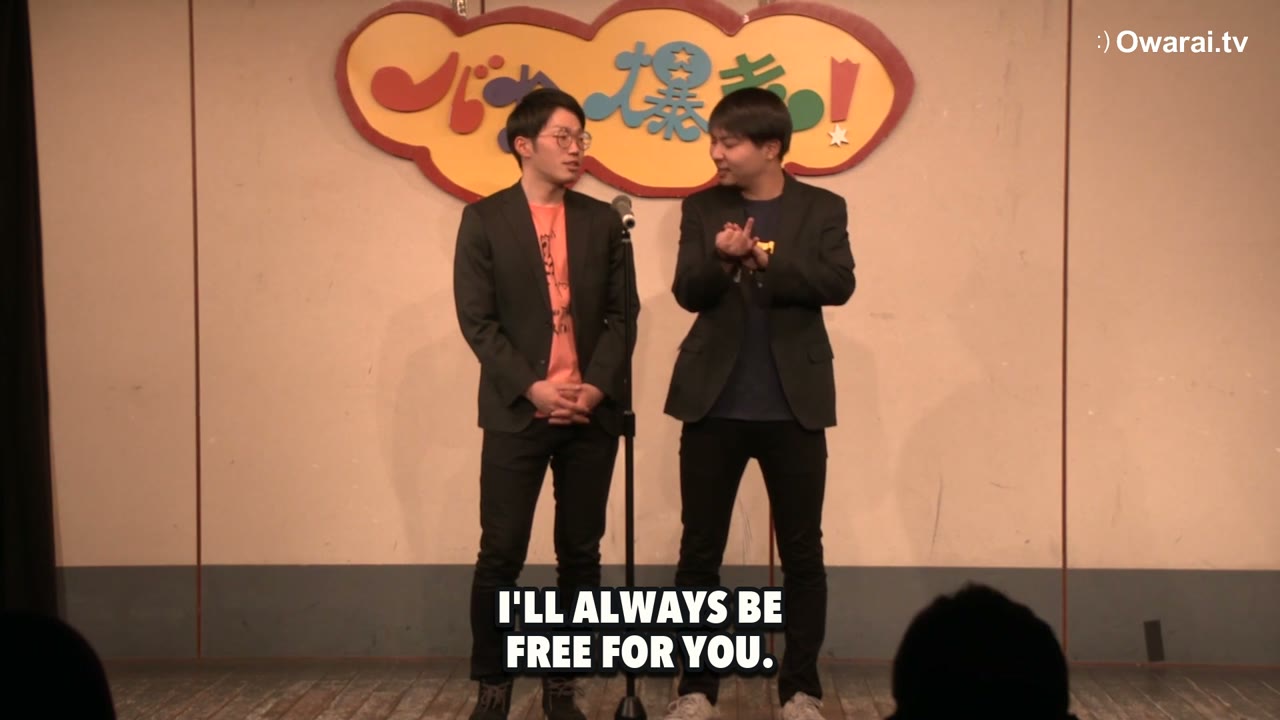 The Boyfriend Sales Pitch
A hopeful dater sweetens the pitch with every no. The friend listening won't budge.
3:36
The Boyfriend Sales Pitch
A hopeful dater sweetens the pitch with every no. The friend listening won't budge.
3:36
We use AI as part of how we create our articles.
Subtitles on this video: AI translation from the Japanese.