
The Premise Leap: When Japanese Comedy Takes an Absurd Idea Seriously
A familiar problem, an unreasonable assumption, and someone determined to make it work: that’s a premise leap. Here’s what to watch for in three Japanese comedy routines.
What’s a premise leap?
A premise leap takes a familiar situation—a conversation about dating, a practice appointment, a classroom—and introduces an unreasonable assumption that the people involved have to deal with. Ordinary priorities, like wanting to be liked or doing a job properly, still matter, even when the situation has stopped making ordinary sense.
If you’re familiar with the way a sketch takes a “what if” and runs with it, you already have a way into these routines. The leap gives the scene a new set of rules, and a character’s dedication to those rules can be as funny as the idea itself.
Follow what matters to the character
First, notice what each person wants before things get strange: a date, a favor, a little admiration. Then listen for the assumption that asks everyone else to follow along, whether that means treating an emotional problem like a practical transaction or giving a rehearsal the seriousness of a real job.
A revealing detail is often what someone insists on getting right when the whole plan already seems unreasonable. Watch the other person’s response, too: a refusal, a question, or an attempt to keep the conversation moving can show how far apart their understandings of the situation are.
Three routines to watch with this in mind
The first two selections are manzai, a form of two-person comedy built around a spoken exchange—think a comedy double act. The third is a solo sketch, with one performer playing a character in a scene.
“I Want a Girlfriend” — Leadoff Man. Ayato Ozaki and Shintaro Tsukatani open on a familiar complaint: no matter how hard one man tries, he can’t find a girlfriend. He’s discussing the problem with a friend he’s known since high school. Listen to the would-be boyfriend’s self-promotion: he approaches dating as if a sufficiently attractive package of perks ought to settle the matter. Start here for the oddly businesslike thinking he brings to a personal frustration, and the earnestness behind his sales pitch.
“Hair Removal Salon” — Camel. Johnny Hanagata and Roppyaku Shimada begin with a modest favor: one man’s beard is getting thicker, and he wants to practice going to a hair removal salon. He asks his partner to play a female staff member and tells him he can keep it casual. Focus on how much doing the role properly matters to the partner, even though the appointment is imaginary. The mismatch between a small request and such serious commitment makes this a good place to watch how a rehearsal acquires stakes of its own.
“Booger Bomb” — Takkano. Naoyuki Takano plays a schoolboy jealous of Takahashi, a fast runner and popular kid from another class. The setup pairs that petty rivalry with an explosion. Keep the student’s hunger for recognition in mind as he addresses his classmates: being taken seriously seems to matter as much to him as being noticed. Watch this one for how a familiar school grievance gives an outlandish situation a recognizably teenage urgency.
Once you spot the unreasonable assumption, follow the perfectly recognizable desire keeping it alive.
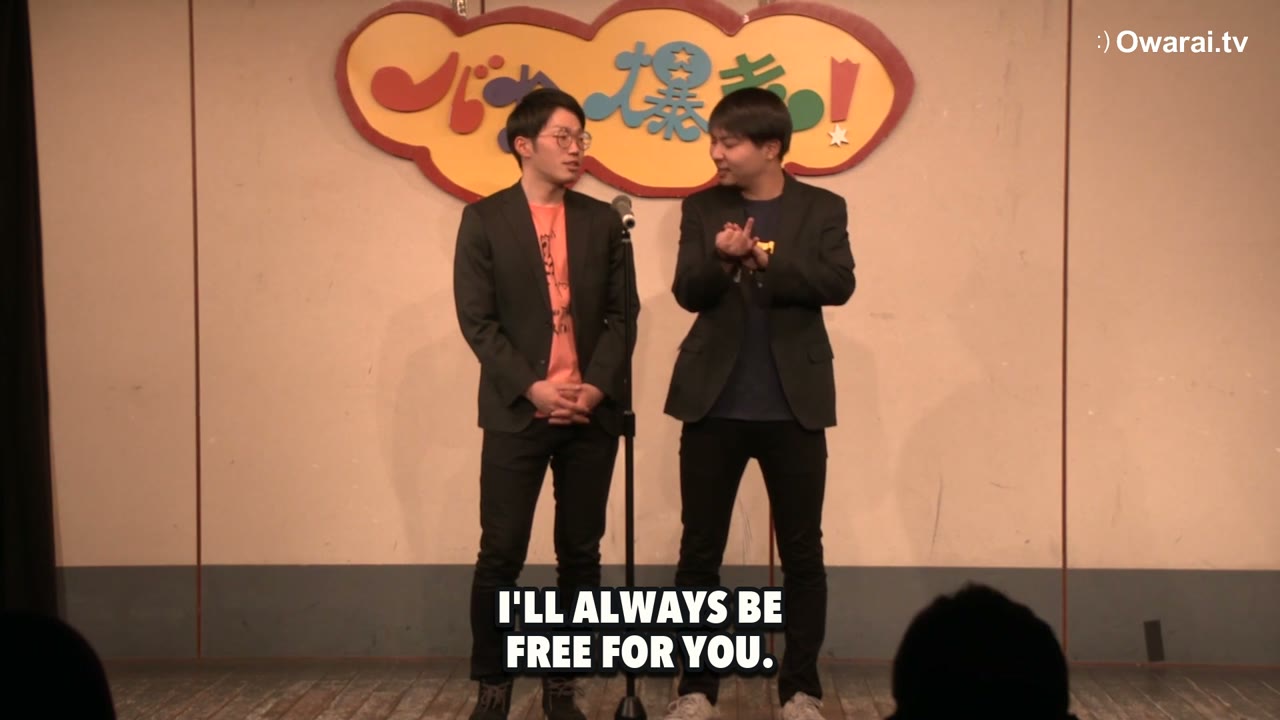 The Boyfriend Sales Pitch
A hopeful dater sweetens the pitch with every no. The friend listening won't budge.
3:36
The Boyfriend Sales Pitch
A hopeful dater sweetens the pitch with every no. The friend listening won't budge.
3:36
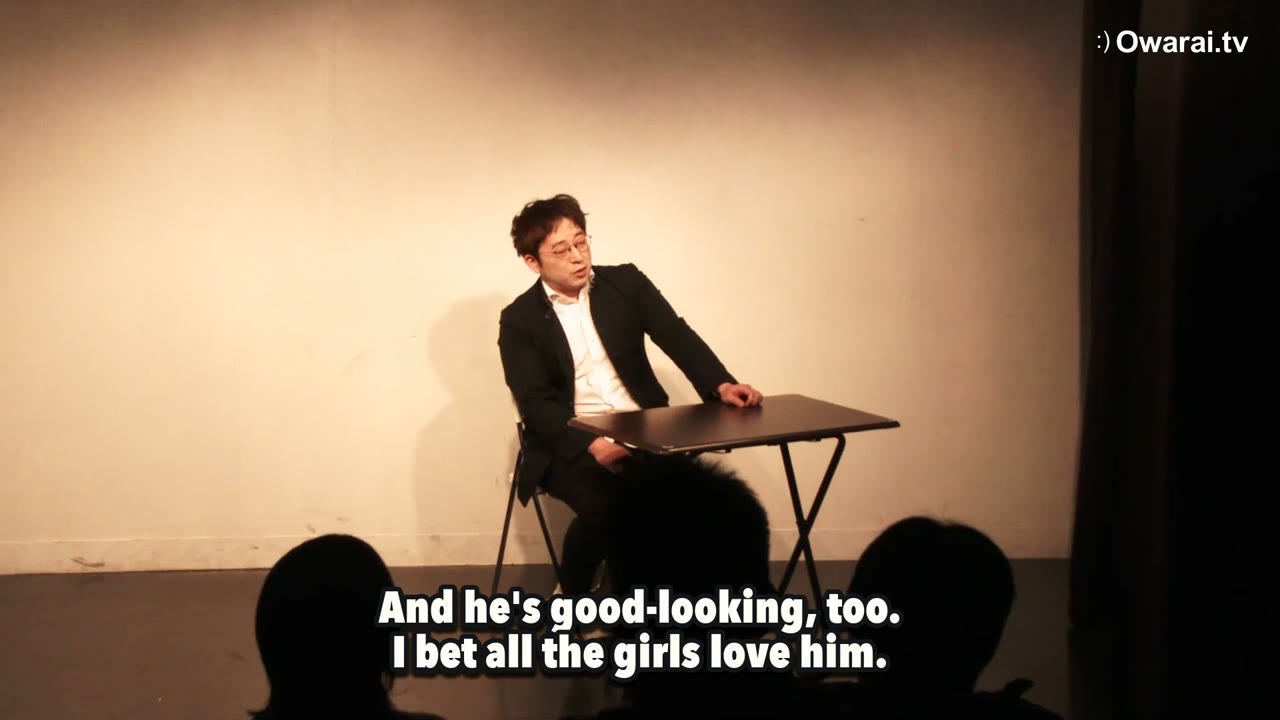 The Classroom Grudge
A jealous student has a window, a grudge, and a booger. A terrible combination.
2:27
The Classroom Grudge
A jealous student has a window, a grudge, and a booger. A terrible combination.
2:27
We use AI as part of how we create our articles.
Subtitles on this video: AI translation from the Japanese.