
What Is "Saisho wa Guu"? The Chant That Kicks Off Japanese Rock-Paper-Scissors
Before a round of janken, players in Japan often chant "saisho wa guu" and all show a fist together. Here's what it means, and how janken itself turns up in Japanese comedy.
What "saisho wa guu" means
Janken is Japan's version of rock-paper-scissors, with three hands: guu (rock), choki (scissors), and paa (paper). "Saisho wa guu" means roughly "First, rock." Everyone chants it together while showing a fist, then rolls straight into "jan-ken-pon!" (some people say "poi" instead) and throws their real hand.
That opening fist isn't a move. It's a way to get everyone on the same beat so nobody throws early or late, which comes in especially handy when a whole group is playing at once. In Japan, janken is often how small everyday questions get settled, like who goes first or who gets stuck with the chore nobody wants. If you grew up saying "rock, paper, scissors, shoot," the rhythm may feel familiar, just with an extra step up front.
Why it makes good comedy material
Many people in Japan learn "saisho wa guu" as kids and can do it without thinking, and that shared familiarity is what makes janken such reliable material for comedy. The chant sets up a common rhythm and a common set of rules, so the moment someone breaks the beat or bends the rules, the audience feels it instantly. And because janken is pure chance, anyone who treats it as a skill to be mastered, or a contest to be won at any cost, is already halfway to a joke.
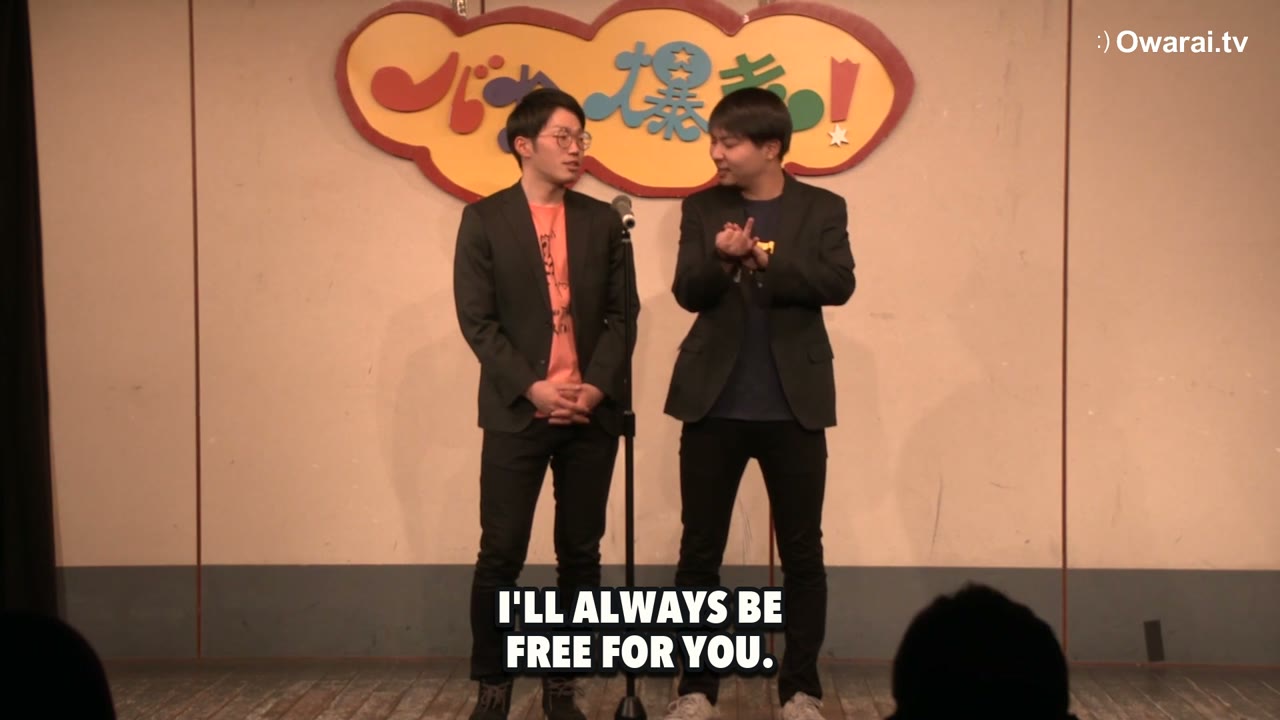 The Boyfriend Sales Pitch
A hopeful dater sweetens the pitch with every no. The friend listening won't budge.
3:36
Watch the whole thing (3:36)
The Boyfriend Sales Pitch
A hopeful dater sweetens the pitch with every no. The friend listening won't budge.
3:36
Watch the whole thing (3:36)
We use AI as part of how we create our articles.
Subtitles on this video: AI translation from the Japanese.