
How Japanese Comedy Plays With Your Expectations
A familiar situation can have you predicting the next line before anyone speaks. Here's how to enjoy that moment of anticipation—and three comedy routines to watch with it in mind.
What does it mean to subvert expectations?
A store clerk stops a customer suspected of shoplifting, and you can probably imagine what the clerk will say next. Subverting expectations starts with that little act of prediction: a routine establishes a situation you recognize, then breaks an assumption you've made about it. You might know this as comic misdirection, where the setup encourages you to anticipate one response and makes another surprising. In the routines below, the useful starting point is an everyday expectation about someone's role: an employee dealing with theft, a friend hearing about dating troubles, or a student comparing himself with a classmate.
Notice the answer you're already expecting
Let the opening establish what each person wants, then notice the response you instinctively expect. We like watching which detail a character considers important: the practical problem, a personal grievance, or the other person's choice of words. That focus gives you something specific to follow while the scene develops, especially when two people have different ideas about what deserves attention. Give your first guess room to change; trying to solve the entire routine can distract from the smaller assumptions being tested along the way.
Three routines to watch with this in mind
"Shoplifting" — Honda Kyodai. A store clerk stops a customer whose pockets are stuffed full. Start with the clerk: faced with such conspicuous evidence, what would you expect this employee to address first? Keep an eye on the clerk's expressions alongside the dialogue as you form that expectation. This sketch makes an accessible first pick because the encounter needs so little explanation: a customer, an employee, and a theft already give you a clear sense of what each person's priorities should be.
"I Want a Girlfriend" — Leadoff Man. This is a conversational comedy routine performed by a duo, comparable to a classic comic double act. A man who can't seem to get a girlfriend talks with a male friend he's known since high school. Focus on what the frustrated man wants his friend to do about his dating troubles, and listen to how he makes his case. Knowing someone for years comes with its own expectations about what you can ask of them; keep that familiar social boundary in mind. Choose this one for a setup built around the relationship between two speakers.
"Booger Bomb" — Takkano. In this solo sketch, a boy in a classroom is jealous of Takahashi, a student in another class who's a fast runner and gets romantic attention. Notice the particular comparison occupying the boy: someone else has both athletic ability and dating appeal. That combination gives his jealousy a concrete focus, while the title supplies fair warning about the gross-out humor. Try this one for the recognizable schoolroom grievance at its starting point, and keep track of what the boy wants his classmates to understand.
Carry one small prediction into your next routine, and enjoy discovering what the performers do with it.
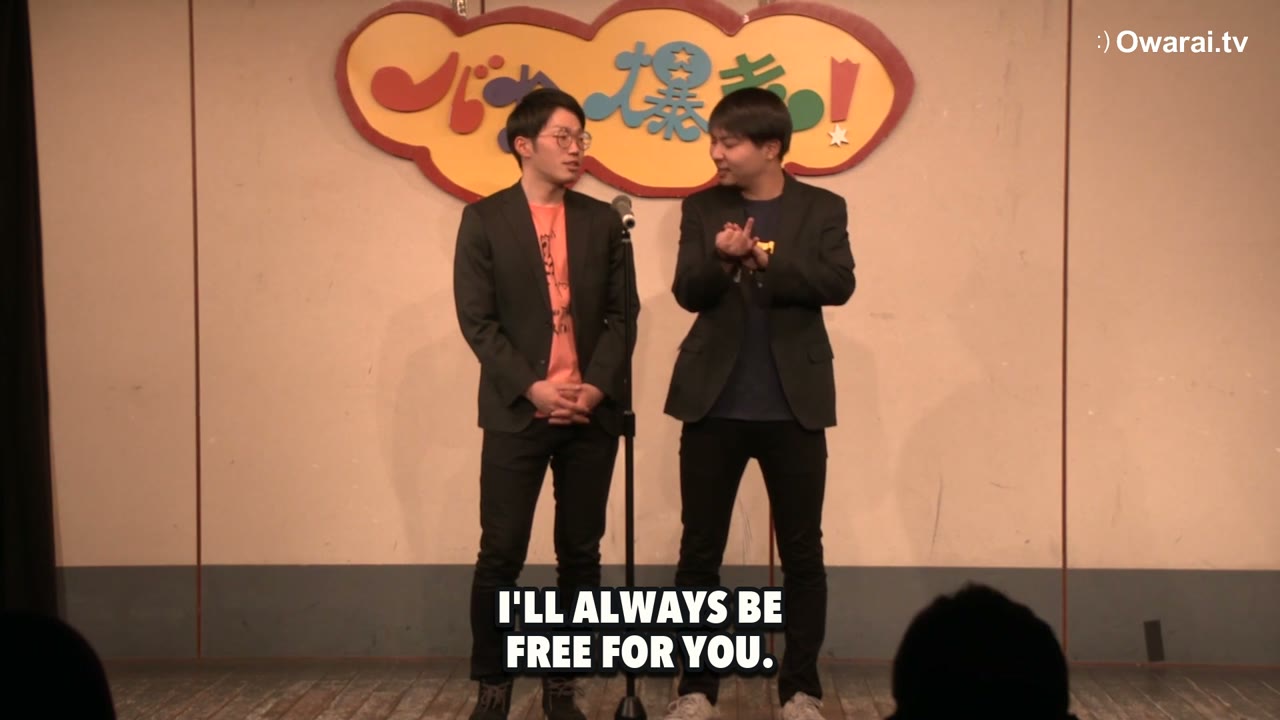 The Boyfriend Sales Pitch
A hopeful dater sweetens the pitch with every no. The friend listening won't budge.
3:36
The Boyfriend Sales Pitch
A hopeful dater sweetens the pitch with every no. The friend listening won't budge.
3:36
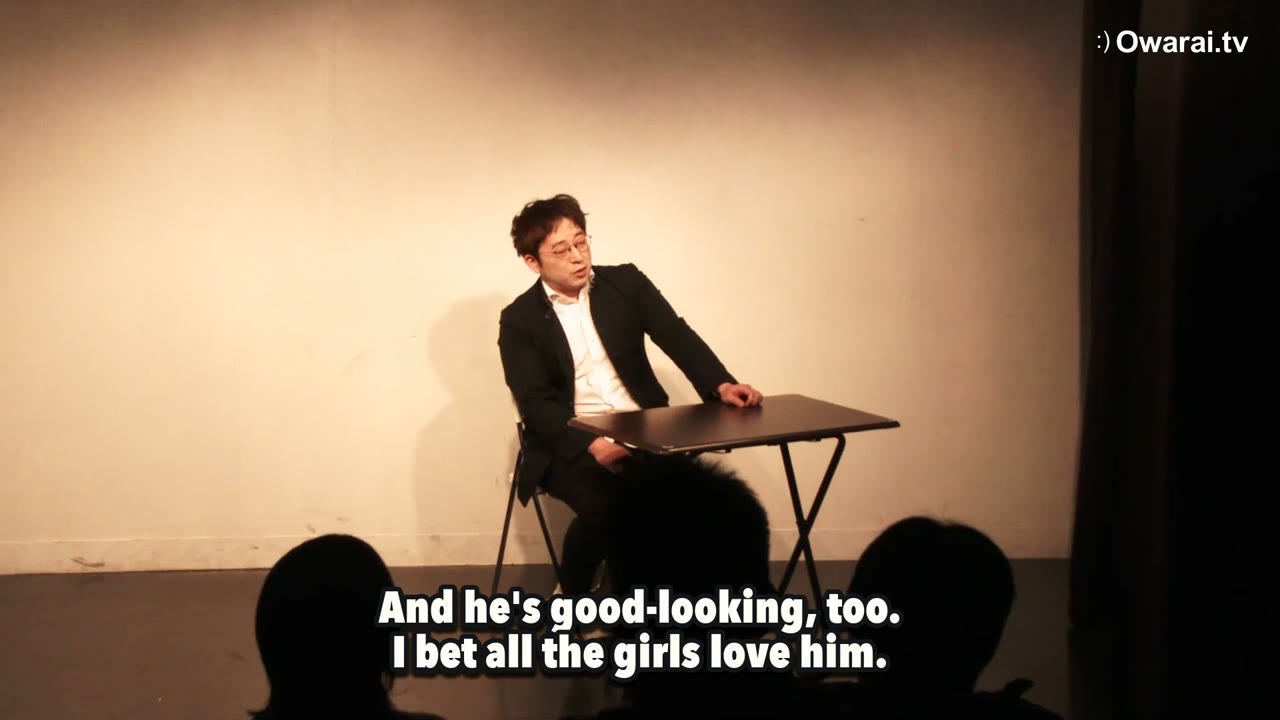 The Classroom Grudge
A jealous student has a window, a grudge, and a booger. A terrible combination.
2:27
The Classroom Grudge
A jealous student has a window, a grudge, and a booger. A terrible combination.
2:27
We use AI as part of how we create our articles.
Subtitles on this video: AI translation from the Japanese.