
What Japanese Comedy Schools Teach—and What Happens After Graduation
A look inside two Japanese comedy schools: performance training, developing routines, finding a partner, and the steps from graduation to joining a talent agency.
Performance training, partners, and a path into the business
At NSC, Yoshimoto Kogyo's comedy school, and Ohta Pro Entertainment College, run by the talent agency Ohta Production, students perform comedy material and study performance skills. NSC also holds meetings to help students find partners, while Ohta Pro's 2027 program requires further selection after graduation before performers can fully join the agency's roster.
What do students study?
According to NSC's admissions FAQ, checked on October 4, 2026, performing comedy material accounts for 40% of the curriculum—what the school calls its defining feature. Other classes cover voice training, acting, dance, and idea development, with occasional special classes taught by experienced comedians. Some classes have restricted eligibility, and the curriculum can change from year to year.
For its 2027 intake, Ohta Pro Entertainment College's official course page describes basic classes with repeated voice exercises using abdominal breathing, along with training in greetings and professional etiquette. Its applied classes assign weekly homework: students spend the week working on an assignment and present it at the next class.
NSC's FAQ also describes a changing timetable. Classes are scheduled between roughly 10 a.m. and 9 p.m., including weekends and holidays. A day's schedule can contain one to five classes, each lasting roughly 45 to 210 minutes. Students receive the following month's schedule around the middle of the preceding month, though changes may follow. Paid work must fit around class time.
How do students develop their material?
According to Ohta Pro Entertainment College's official description for the 2027 intake, each class ends with students performing their material and receiving direct coaching to improve it. The school also describes an in-house show featuring all enrolled students, with graduates serving as hosts to help students practice thinking on their feet in conversation.
The graduation show adds work behind the scenes. Students in the writing course plan and structure the production, while comedy students perform and take backstage roles. The school describes this show as the culmination of the year's work and a major opportunity to make a case for provisional affiliation with Ohta Production.
Do you need a partner before enrolling?
According to NSC's admissions FAQ, students can enroll together as a duo or trio, but arriving alone is also an option. The school holds monthly meetings for students looking for a comedy partner.
In an interview, a solo comedian recalled wanting to form a duo while attending Shochiku Geino's comedy school. When the comedian did want to decline an invitation to team up, saying "I want to work solo" offered a way to avoid causing offense. What began as a polite excuse became a real preference: the comedian came to enjoy performing alone.
A partner can also be found outside school. In another interview, a performer described finding a potential partner's post on an online message board for people seeking comedy partners. Because the person who posted was close to the performer's age and based in Tokyo, the performer decided to arrange a meeting. The two went on to form a duo.
Does graduation mean joining an agency?
Ohta Pro Entertainment College's official information for the 2027 intake describes six months of provisional affiliation with Ohta Production, with agency support during that period. Its detailed progression chart limits this stage to performers in the March graduation show.
From April through September, those provisionally affiliated performers take part in auditions and live shows alongside comedians already on the agency's roster. They then appear in a final assessment show; only those who pass become full members of Ohta Production's roster from October. Graduation alone therefore does not guarantee full affiliation. These conditions belong to Ohta Pro's published program.
What to listen for in your next clip
In your next comedy clip, listen to how clearly a performer delivers a line and how quickly a reply follows—the voice training and conversation practice described in these programs give you concrete details to notice.
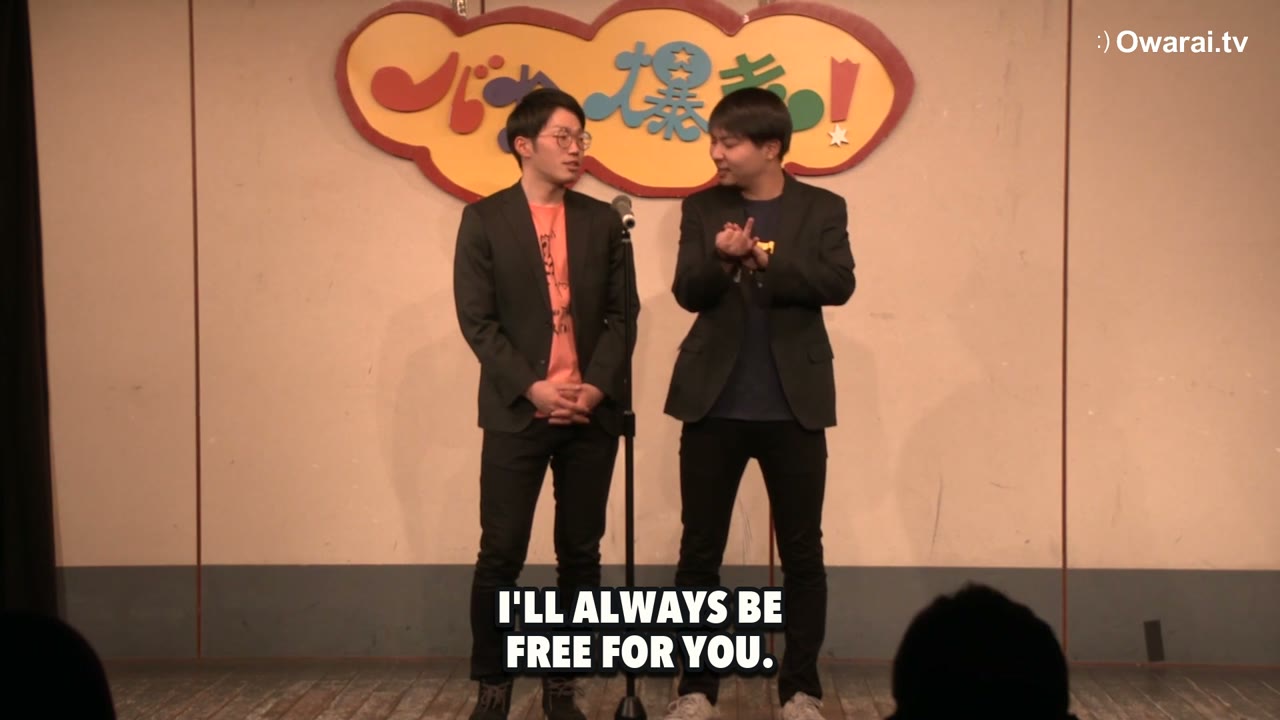 The Boyfriend Sales Pitch
A hopeful dater sweetens the pitch with every no. The friend listening won't budge.
3:36
Watch the whole thing (3:36)
The Boyfriend Sales Pitch
A hopeful dater sweetens the pitch with every no. The friend listening won't budge.
3:36
Watch the whole thing (3:36)
We use AI as part of how we create our articles.
Subtitles on this video: AI translation from the Japanese.