
Boke and Tsukkomi: How Japanese Comedy Duos Play Off Each Other
Boke and tsukkomi are two complementary roles in Japanese comedy: one introduces the offbeat idea, and the other challenges it. Here’s what to listen for in three routines.
What are boke and tsukkomi?
In manzai, a Japanese form of stand-up built around a comic conversation between two performers, boke and tsukkomi name two familiar roles. The boke introduces an odd idea, a questionable assumption, or reasoning that goes somewhere it shouldn’t; the tsukkomi challenges it and brings the mismatch into focus. If you know the comic-and-straight-man dynamic, that’s a useful starting point, though the tsukkomi’s correction can be a joke in its own right. A boke doesn’t have to seem clueless: someone making a carefully argued but unreasonable case can fill that role just as well.
Listen to what each person is arguing for
Listen for what the tsukkomi objects to: the words just spoken, the assumption behind them, or the confidence with which they’re delivered. A short correction can make an absurd claim snap into focus, so give the reply as much attention as the setup. We like to follow the argument inside the joke: what someone is determined to prove, and what their partner thinks shouldn’t need explaining. Timing helps you hear that disagreement, too: notice the pause before a response, or the word a performer stresses, while the subtitles carry the details.
Three routines to watch this way
Leadoff Man, “I Want a Girlfriend”: A man who’s struggling to find a girlfriend talks with a friend he’s known since high school. Pay attention to the way he presents himself as a romantic prospect, turning the conversation into something like a sales pitch. Listen for how each new pitch tries to top the last one, and which part of the claim his friend pushes back on. This is a good place to notice the effort behind a boke’s argument: he wants his case to sound convincing.
Camel, “Hair Removal Salon”: One partner’s beard has been getting thicker, and he wants to rehearse a trip to a hair-removal salon, with his partner playing a staffer. A casual run-through sounds fine to the person asking; the person recruited for the scene wants to take the assignment seriously. Listen for how the back-and-forth heats up around that difference. The rehearsal gives you something concrete to follow: how much commitment does each performer think this pretend appointment deserves?
Baioni, “A Matter of Degree”: One performer has a complaint about restaurant customers who ask whether a portion is big or a dish is spicy: how can a server answer without knowing their appetite or tolerance for heat? The duo puts that argument to work in a scene set at a Chinese restaurant. Watch the server’s insistence on the limits of what they can know, alongside the customer’s need for a usable answer. The appeal here is the gap between having a defensible point and being helpful, an everyday service problem that gives the two comic roles something specific to argue over.
Pick a routine and follow the argument; both sides have a part in making the joke land.
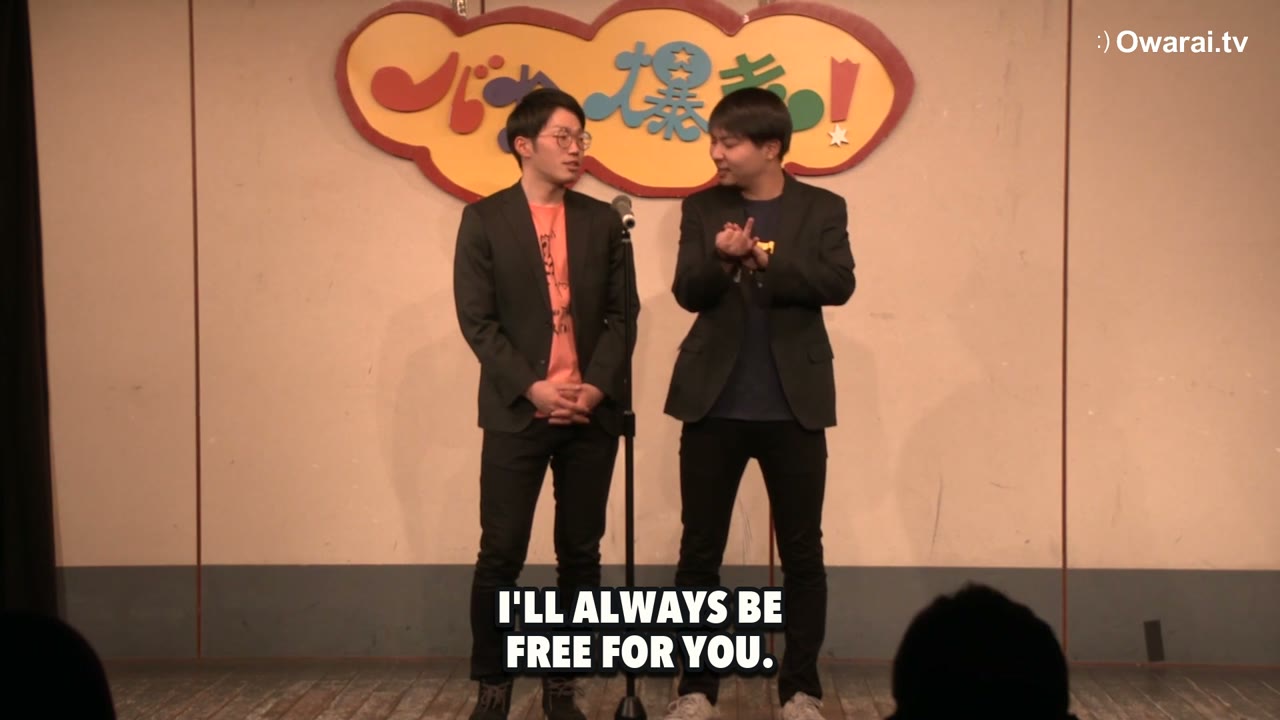 The Boyfriend Sales Pitch
A hopeful dater sweetens the pitch with every no. The friend listening won't budge.
3:36
The Boyfriend Sales Pitch
A hopeful dater sweetens the pitch with every no. The friend listening won't budge.
3:36
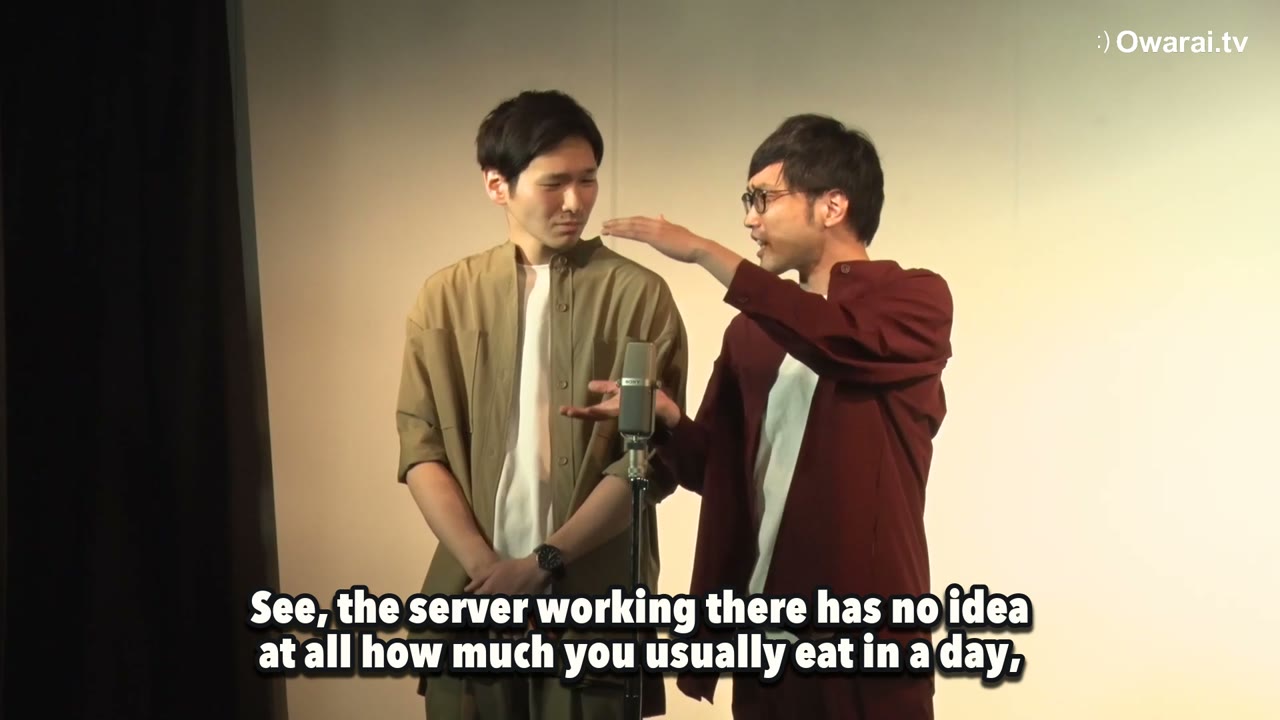 Ordering Shouldn't Be This Hard
A server treats simple questions about portions and spice as invitations to argue.
5:35
Ordering Shouldn't Be This Hard
A server treats simple questions about portions and spice as invitations to argue.
5:35
We use AI as part of how we create our articles.
Subtitles on this video: AI translation from the Japanese.