
What Is Hikikomori? The Japanese Word for Shutting Yourself In, and Why It Shows Up in Comedy
A quick guide to the Japanese word hikikomori, and how two Japanese comedy duos build routines around it.
What does hikikomori mean?
Hikikomori (hee-kee-koh-moh-ree) is a Japanese word for people who stay in their room or home for long periods and step away from school, work, and most contact with the outside world. The word roughly means "pulling inward and shutting oneself in," and it is known outside Japan as well, often simply as hikikomori. In Japan it is widely discussed as a social issue. It often comes up in connection with young people, but circumstances vary a great deal from person to person. Families are often part of the picture too, since many people in this situation live with their parents.
Why it works as a comedy setting
Hikikomori is a real struggle for real people and their families, so the sketches that handle it well tend to come at it from an angle rather than head-on. It works as a setting because the picture is so familiar: a closed bedroom door, a worried parent, and someone on the other side trying to find the right words. For many viewers in Japan, that scene needs almost no setup. As we see it, the routines that land best aim their jokes at the awkwardness around the situation, such as the visit, the small talk, and the assumptions people bring with them, and not at the person behind the door.
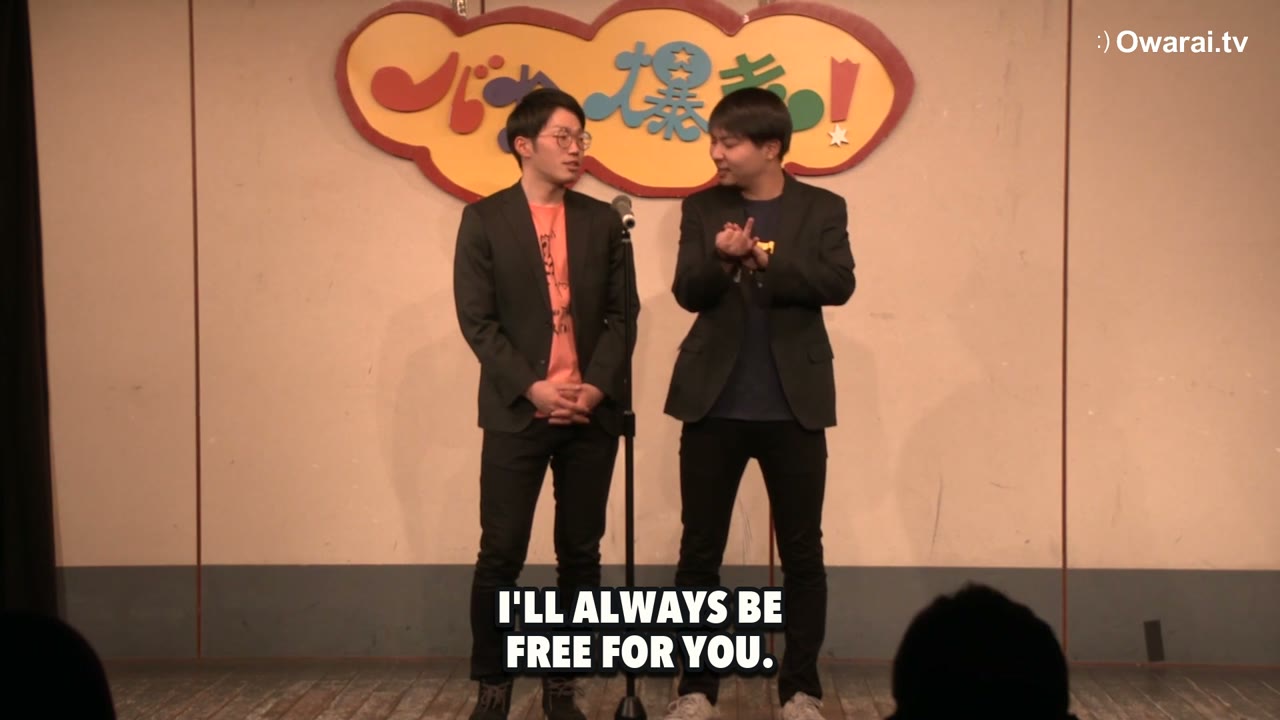 The Boyfriend Sales Pitch
A hopeful dater sweetens the pitch with every no. The friend listening won't budge.
3:36
Watch the whole thing (3:36)
The Boyfriend Sales Pitch
A hopeful dater sweetens the pitch with every no. The friend listening won't budge.
3:36
Watch the whole thing (3:36)
We use AI as part of how we create our articles.
Subtitles on this video: AI translation from the Japanese.