
What Is Konto? A Viewer's Guide to Japanese Sketch Comedy
Konto is Japan's take on the comedy sketch: performers step into characters and play out a scene. Here's what it is, what to watch for, and three sketches to start with.
What konto is
In Japanese comedy, konto is the word for a sketch. Performers step into characters and play out a scene, usually with a simple set, a costume or two, and a situation you can read in seconds: a store counter, a classroom, a meeting at school. The word is usually traced to the French conte, meaning a short tale.
Konto is easiest to understand next to its sibling, manzai. In manzai, two comedians stand at a center mic and trade lines as themselves. In konto, those same comedians become a cashier and a customer, or a teacher and a parent, and stay inside that world until the lights go down. If you've watched sketch comedy in the U.S., the shape will feel familiar: a premise, characters who take it completely seriously, and an escalation. Many konto run just a few minutes and are built for a live stage, with one, two, or three performers carrying the whole thing.
Because so much of the comedy lives in the situation and the relationships rather than in wordplay, konto tends to be one of the friendliest doors into Japanese comedy for viewers who don't speak the language.
What to watch for
Start by giving the opening moments your full attention. A typical konto spends its first stretch establishing a perfectly ordinary situation, and the first big laugh tends to land right after that picture is locked in. If you know exactly what "normal" looks like here, you'll feel it the instant something tips.
Then look for the one thing that's off. The best konto bend a single rule, like a clerk who reacts to the wrong thing or a kid who's sure of the wrong cause, and then follow that logic much further than any reasonable person would. Some of the most satisfying ones flip a relationship: the person who should have the upper hand loses it, or the one being judged starts doing the judging. Keep an ear out for callbacks, too. A line or gesture that returns again and again, unchanged, often gets bigger every time precisely because it never budges.
Finally, watch the faces. Konto performers commit to characters who have no idea they're in a comedy, and much of the pleasure is in how seriously they play it.
Three sketches to watch this way
Honda Kyodai, "Shoplifting." A customer tries to walk out of a store with pockets stuffed so full they're practically bursting, and the clerk calls out. So far, a routine bust. But instead of a scolding, the clerk is so taken with just how bad this shoplifting attempt is that the praise starts pouring out, along with an urge to let the whole thing slide. Watch the power run backwards: the person who caught the thief ends up acting like the thief's biggest fan. It's about as clean an example of a relationship flip as you'll find, which makes it a great first konto.
Takkano, "The Booger Bomb." A student in a classroom, jealous of Takahashi, the fast, popular kid from the class next door, flicks a booger out the window at the exact moment a huge explosion goes off. He becomes convinced the two are connected and sets out to prove it in front of everyone. Takkano carries the sketch solo, so watch how much comes out of one performer, one face, and one deeply committed theory. It's a showcase for the kind of konto that starts from a single absurd assumption and treats it like hard science.
Baioni, "My Son's Drawing." Kosuke drew a portrait of Miki, the girl who sits next to him in art class, and made her cry. Now his dad has been called in to school. The wrinkle: Dad draws portraits for a living, and the school would like him to make one of Miki that won't upset her. Watch a father's professional pride run into a very delicate request, and keep an eye on everyone's expressions whenever a drawing is about to be shown. It's a good one for seeing how konto can turn an ordinary parent meeting into something with real stakes.
Once you start spotting the one rule a sketch has decided to break, every konto becomes a little game of guessing how far it's willing to go.
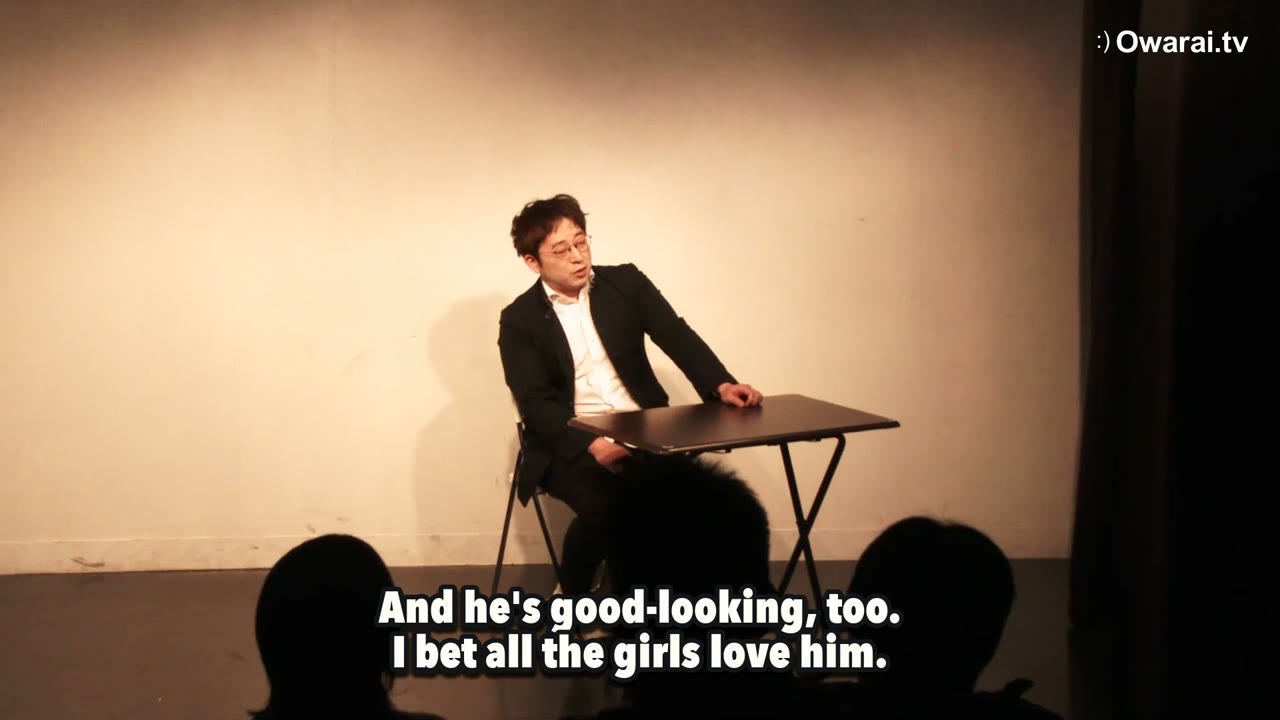 The Classroom Grudge
A jealous student has a window, a grudge, and a booger. A terrible combination.
2:27
The Classroom Grudge
A jealous student has a window, a grudge, and a booger. A terrible combination.
2:27
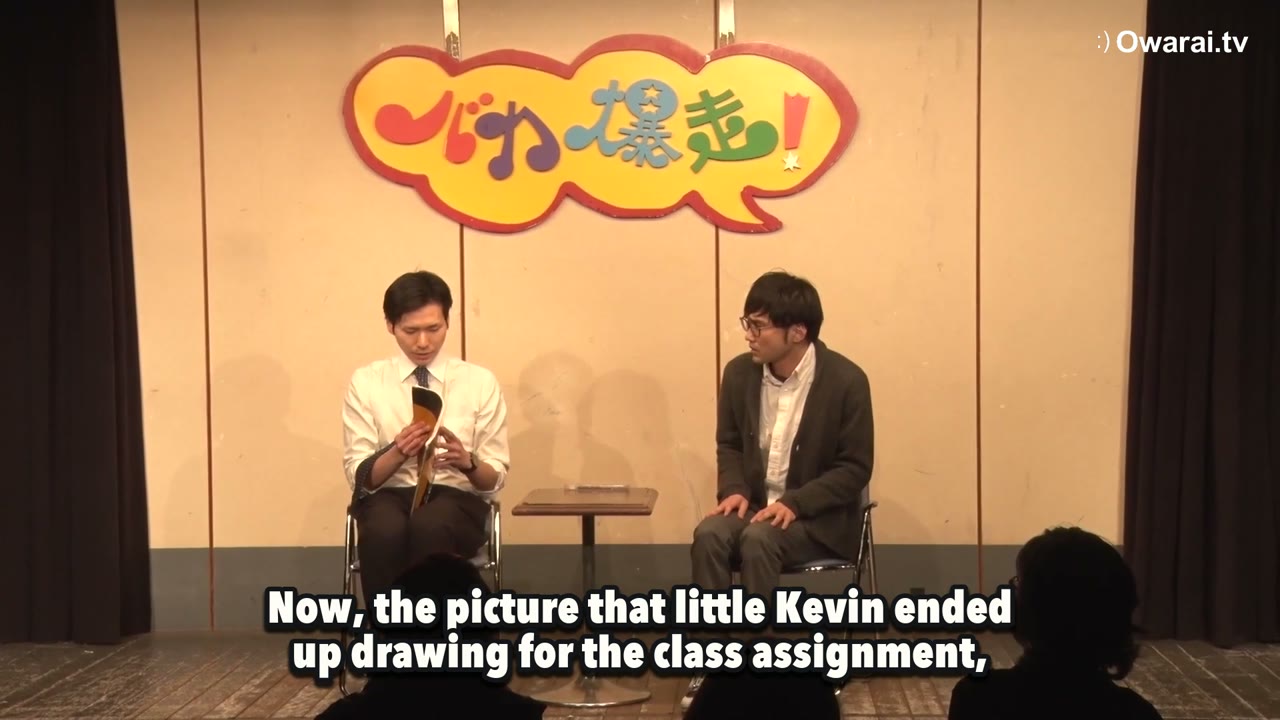 In Trouble Over a Drawing
A dad gets called in to school after his son's drawing of a classmate makes her cry.
5:17
In Trouble Over a Drawing
A dad gets called in to school after his son's drawing of a classmate makes her cry.
5:17
We use AI as part of how we create our articles.
Subtitles on this video: AI translation from the Japanese.