
What Is Nazokake? Japan's Riddle-and-Pun Word Game, Explained
Nazokake is a traditional Japanese word game that links two unrelated things with a single pun. Here's how the formula works, and why the pause right before the answer is where the fun happens.
What is nazokake?
Nazokake is a traditional Japanese word game built on a fixed three-part formula. The player takes a topic, A, and pairs it with something that seems completely unrelated, B: "A to kakete, B to toku" — roughly, "Take A, and I'll answer it with B." Then comes the line everyone is waiting for: "Sono kokoro wa?" ("And the heart of it?"). The answer is a single word, or two words that sound alike, that fits both A and B in different senses.
Here's a simple example, with the Japanese spelled out: "Denwa to kakete, furikake to toku. Sono kokoro wa? Dochira mo kakemasu." — "Take a phone call, and I'll answer it with furikake rice seasoning. And the heart of it? Both are things you 'kakeru.'" In Japanese, you kakeru a phone call (you make one), and you kakeru furikake over rice (you sprinkle it on). If you grew up on pun riddles like "What's black and white and read all over?", this will feel familiar, with one twist: in nazokake, the person answering builds the riddle and the solution at the same time.
Why it works as comedy
The fun starts with distance. The further apart A and B are, the more the audience leans in, wondering how on earth the two could connect. "Sono kokoro wa?" works like a built-in drumroll: a beat of silence where the whole room waits to see if the pun will land.
And it's a game you can lose charmingly. A clean, clever answer gets an admiring "ohh," while a strained one gets a groan, and both reactions can get a laugh. Comedians are sometimes handed a topic on the spot, so nazokake can also work as a quick test of wit, which is part of why it's often treated as a real skill rather than just a dad joke.
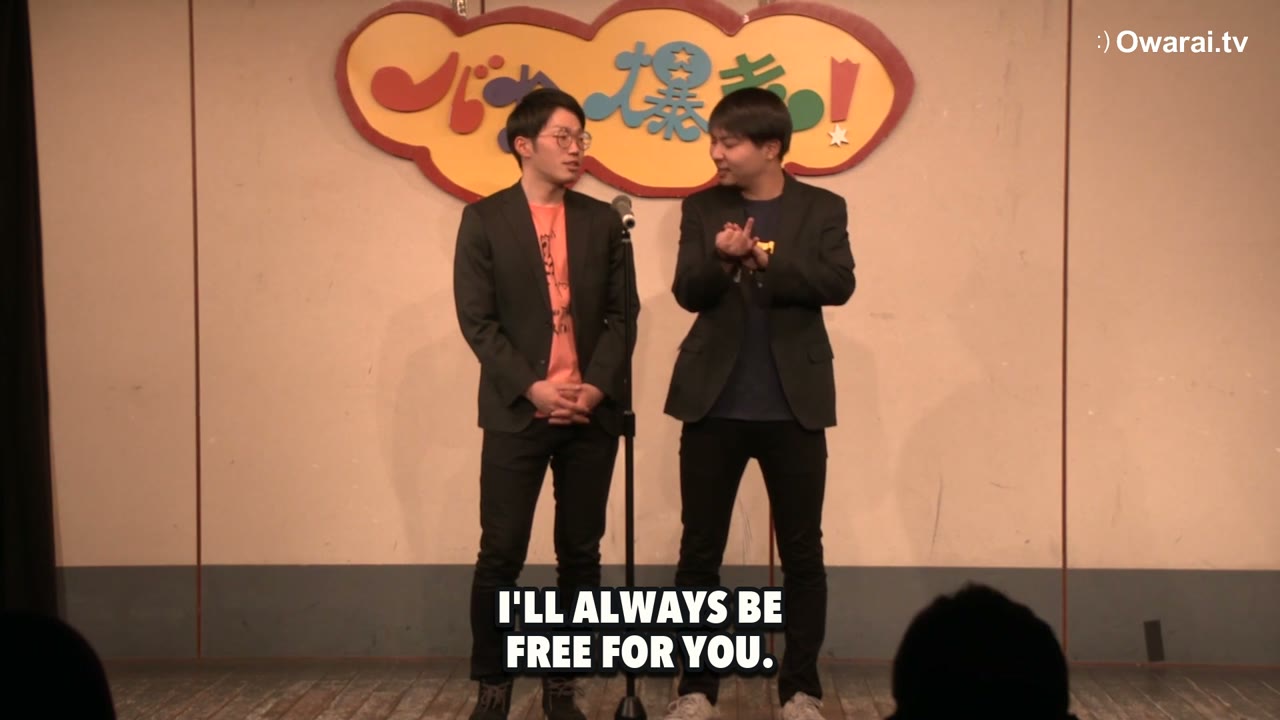 The Boyfriend Sales Pitch
A hopeful dater sweetens the pitch with every no. The friend listening won't budge.
3:36
Watch the whole thing (3:36)
The Boyfriend Sales Pitch
A hopeful dater sweetens the pitch with every no. The friend listening won't budge.
3:36
Watch the whole thing (3:36)
We use AI as part of how we create our articles.
Subtitles on this video: AI translation from the Japanese.