
What Is Pin-Gei? How to Watch Japanese Solo Comedy
Japanese solo comedy can put an entire scene in one performer's hands. These three one-person sketches show how much you can learn about a conversation from hearing just one side.
One performer, a whole scene
Pin-gei is Japanese solo comedy: a broad category defined by one person performing an act. For an American viewer, stand-up is one familiar point of reference, though a solo performer can also step into a character and act out a scene.
The three selections here are one-person versions of konto, or sketch comedy, built around recognizable situations: a conversation with a coworker, a teacher starting class, and a goodbye at a station. The one-person label describes the performance; the credited comedian or comedy group may work in other formats, too.
Listen for the other side
Start with who the character is addressing: a colleague, a classroom, and a romantic partner each give a performer a different kind of conversation to build. A pause can leave room for an unheard response, while the next line helps you imagine what prompted it.
We find these scenes especially fun to watch when the absent person starts to feel familiar through the speaking character's reactions. Follow what that character wants from the encounter, and let the responses, expressions, and silences fill in the relationship without trying to reconstruct every missing word.
Three one-person sketches to watch this way
Takkano, "A Quiet Word with a Coworker": An office worker meets a colleague at a coffee shop to discuss rumors that the newlywed colleague has been involved with three women at work. They joined the company in the same year, giving them a shared history before this uncomfortable conversation begins. Watch how the office worker approaches such a personal subject with a fellow employee. You never hear the colleague's voice, making this a good starting point for following an exchange entirely through one person's side of it.
Rinrin Parker, "Substitute Teacher": The regular teacher is out with a fever, a substitute has a class to teach, and there's a monster that reacts to sound. Keep the substitute's immediate task in mind: getting the lesson under way in this particular classroom. Movement, facial expressions, and silent pauses are worth watching alongside the dialogue, especially with sound built into the predicament. Choose this one to explore how a performer can keep a scene going through the stretches when nobody speaks.
Aoi-chan, "Goodbye at the Station": A girlfriend is moving to Tokyo, and her boyfriend has come to see her off at the station. The opening presents the kind of ideal farewell you might expect in a TV drama. Watch the scene through the girlfriend's attention to the person seeing her off: what does she want from this goodbye, and how does she address him? This is a chance to see how one performer can establish a couple's relationship through one character's side of a familiar occasion.
Once you start imagining the other side of the scene, a single performer can give you plenty of people to watch.
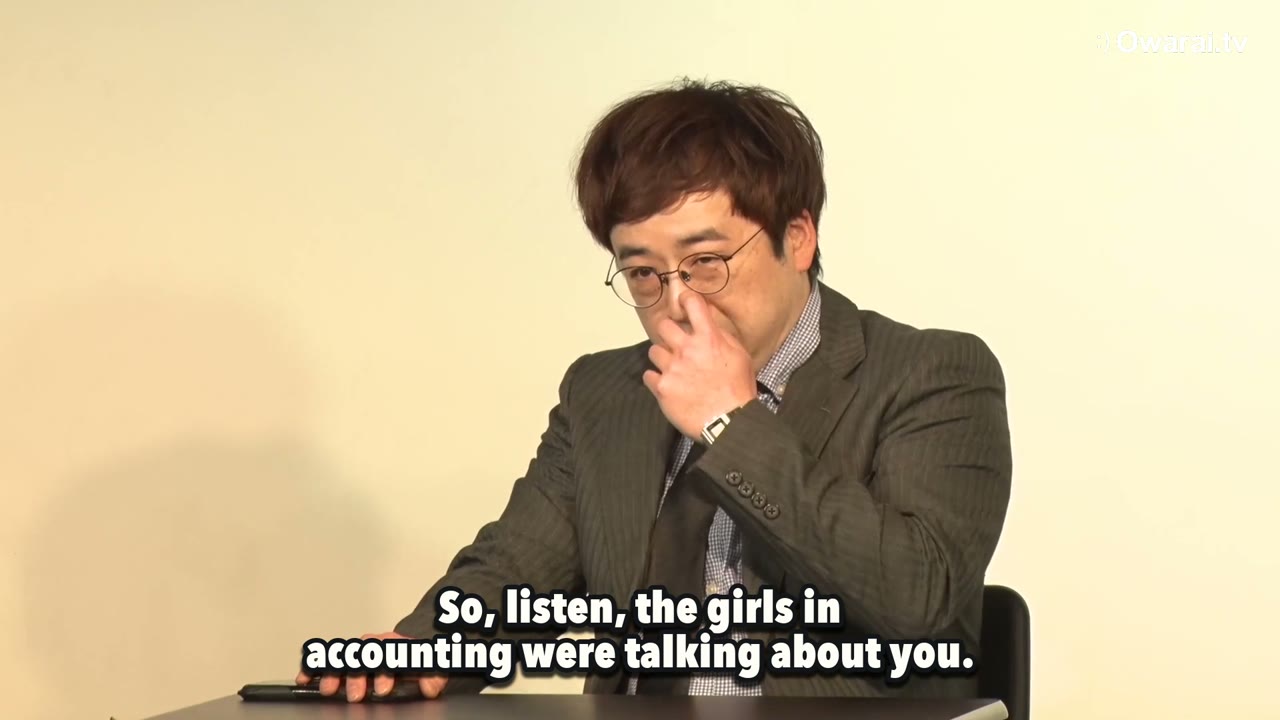 A Private Talk with a Coworker
A cafe chat about office gossip gets oddly intense. We hear only one side.
3:11
A Private Talk with a Coworker
A cafe chat about office gossip gets oddly intense. We hear only one side.
3:11
We use AI as part of how we create our articles.
Subtitles on this video: AI translation from the Japanese.