
What Is Rakugo? Japan's One-Person Comic Storytelling, Explained
Rakugo is a traditional Japanese art in which a single seated storyteller plays every character using only a fan and a hand towel. Here's how it works, and why its style still echoes through Japanese comedy today.
What is rakugo?
Rakugo is a traditional Japanese form of comic storytelling performed by one person. The storyteller kneels on a floor cushion called a zabuton and, with no set and no costume changes, voices every character in the tale: the scatterbrained tenant, the grumbling landlord, the neighbor who thinks he knows everything.
The only props are a folding fan and a small hand towel. The fan can become chopsticks, a pipe, or a writing brush, and the towel can stand in for a wallet or a letter. A slight turn of the head to the left or right signals a switch between speakers. Many classic stories are set in old Edo, the former name of Tokyo, and build toward a closing punchline. Performers often use an unhurried, polite way of speaking, which sets rakugo apart from the rapid back-and-forth of a two-person manzai act.
Why rakugo keeps turning up in comedy
In our view, the appeal comes from a gap. One person sits almost perfectly still and fills an entire street with people. The audience does half the work, picturing a bowl of noodles from nothing more than a fan and a slurping sound. That shared act of imagination is part of what makes a well-timed line land.
The style is also instantly recognizable. The kneeling posture, the measured pace, and the old-fashioned courtesy work as a kind of shorthand. Many Japanese viewers will catch the reference as soon as someone slips into that storyteller cadence, even in a setting that has nothing to do with rakugo. Some American readers might compare it to a friend who suddenly starts talking like an old-time radio announcer: the voice alone tells you what's being referenced.
What to listen for
As you watch Japanese comedy, listen for rakugo's fingerprints. Look for a performer who slows down and turns polite for no obvious reason, or who shifts between characters with a turn of the head. You may also notice a story that takes its time before landing its final line. Once you know the form, you'll start to hear it in places you didn't expect.
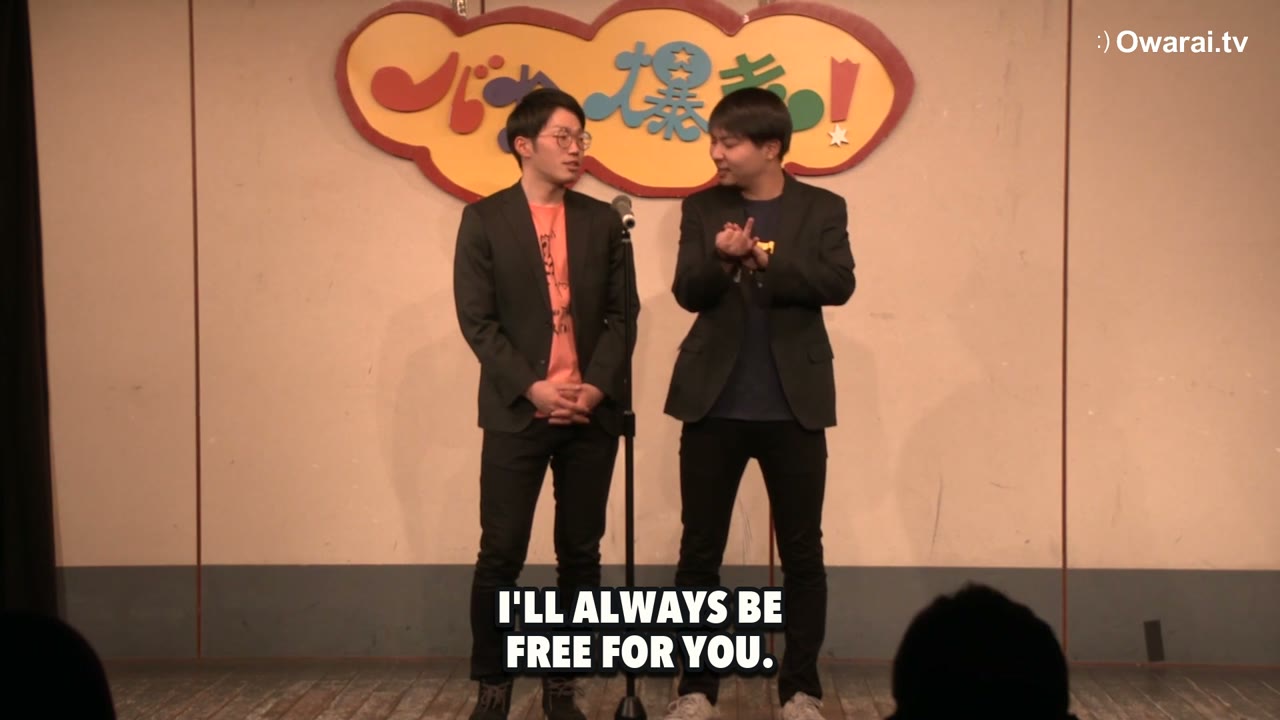 The Boyfriend Sales Pitch
A hopeful dater sweetens the pitch with every no. The friend listening won't budge.
3:36
Watch the whole thing (3:36)
The Boyfriend Sales Pitch
A hopeful dater sweetens the pitch with every no. The friend listening won't budge.
3:36
Watch the whole thing (3:36)
We use AI as part of how we create our articles.
Subtitles on this video: AI translation from the Japanese.