
Lost in Translation: Why Japanese Wordplay Is So Hard to Subtitle
Puns are some of the hardest jokes to carry from Japanese into English. Here's what subtitlers and dubbers do with them, how to spot one hiding under a subtitle, and three routines to watch with that in mind.
What makes wordplay so hard to translate?
A lot of Japanese comedy runs on wordplay: two words that sound alike, a word read a different way, a phrase that doubles as something else. Japanese has a huge number of words that sound the same, so the language practically invites it. The closest English cousin is the pun, or the dad joke. The difference is that in manzai, the rapid-fire two-person stand-up built on a straight man and a funny man, a pun can be the payoff an entire bit has been building toward.
That's where translators get stuck. A subtitle gets a second or two and a line or two of text. There are really three options: swap in an English pun that does the same job, drop the pun and keep the rhythm going, or explain it. Explaining is the last resort, because an explained pun almost never gets a laugh. Dubbing is even tighter. The new line has to fit the length of the original voice, and the key word has to come through clearly.
How to watch: find where the pun used to be
Here's a trick we like. When a subtitle suddenly reads a little stiff, or the live audience laughs harder than the English line seems to deserve, there's probably wordplay underneath. You aren't missing the joke. You're looking right at the spot where it lived.
The good news is that strong routines rarely hang everything on a single pun. Wordplay tends to be the garnish. The main course is usually a character who won't let something go, a power dynamic that flips, or a phrase that keeps coming back. Those travel well, so treat the puns as a bonus layer and let the structure carry you.
Three routines to watch with this in mind
"Hair Removal Salon" — Camel (Johnny Hanagata and Roppyaku Shimada). One half of this duo has a beard coming in heavier than they'd like, wants to rehearse a visit to a hair-removal salon, and asks their partner to play the staff member. The instructions are basically "just wing it." The partner refuses to wing anything, insists on doing it properly, and gets angrier than any practice run could possibly justify. Keep an eye on who's in charge: the person who asked for the favor ends up on the receiving end. That flip needs no translation at all, which makes this a good first watch. You'll feel how little a lost pun matters next to a power shift.
"Turkish Ice Cream" — Sakipon. In this solo character piece, Sakipon plays a woman working a Turkish ice cream stand, the stretchy, chewy kind that vendors love to tease customers with. Then her ex, Yu, who she broke up with last month, shows up wanting to get back together. Every point she makes about the breakup comes back to the ice cream's stretch and stick. Those comparisons are where the wordplay lives, and English happens to share some of that vocabulary, so it's fun to count how many survive the subtitles. Sakipon also plays it big physically, and plenty of it lands with no words at all.
"In Love with a Polar Bear" — Ponpoko. One member of the duo announces they've fallen in love with a polar bear. The other, openly questioning their partner's sanity, starts grilling them: why, how, and what a date would even look like. Watch the gap between the straight man's perfectly reasonable questions and the total conviction of the answers. That commitment is the engine, and from the first exchange the logic is already slightly off in a way that keeps escalating. A few lines lean on wordplay, so if a subtitle lands a little flat, take it as your cue.
The bottom line
Once you know where the puns hide, an awkward subtitle stops being a dead spot and starts being a clue.
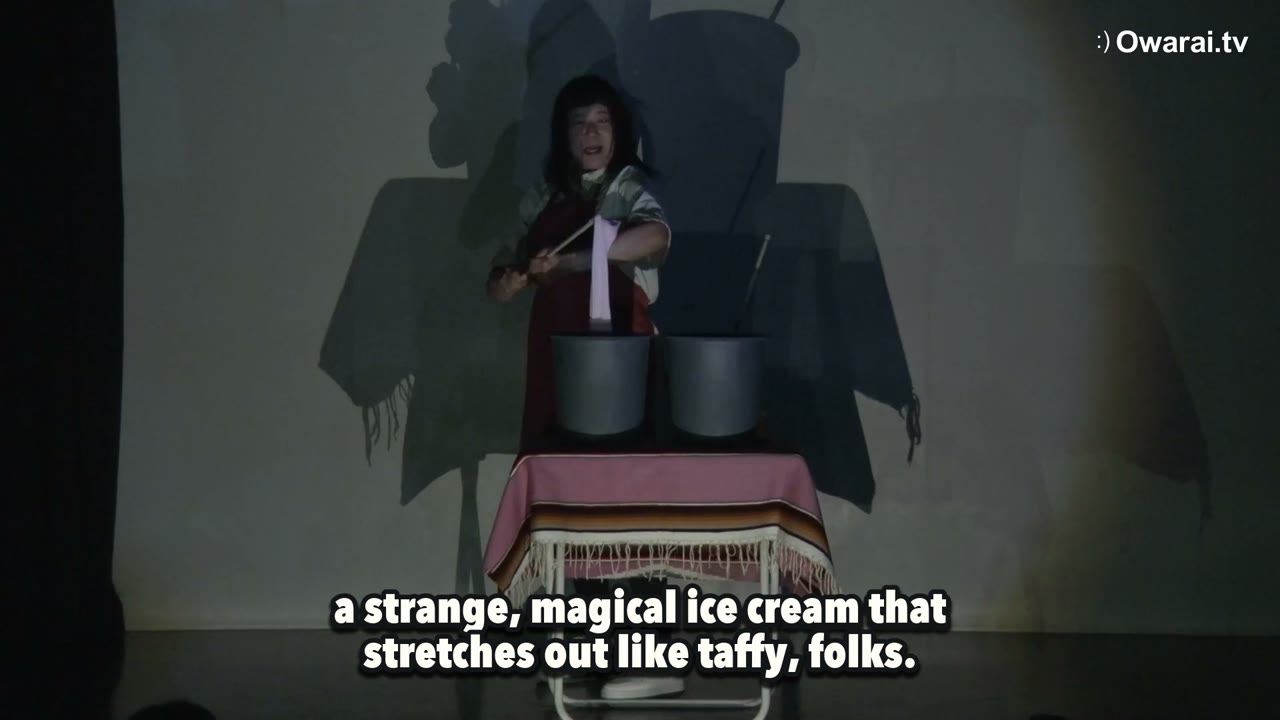 An Ex at the Ice Cream Stand
An ex wants another chance. The ice cream seller keeps pulling the cone out of reach.
2:53
An Ex at the Ice Cream Stand
An ex wants another chance. The ice cream seller keeps pulling the cone out of reach.
2:53
We use AI as part of how we create our articles.
Subtitles on this video: AI translation from the Japanese.