Eight People, Two Tables: A Meal with Hayashi
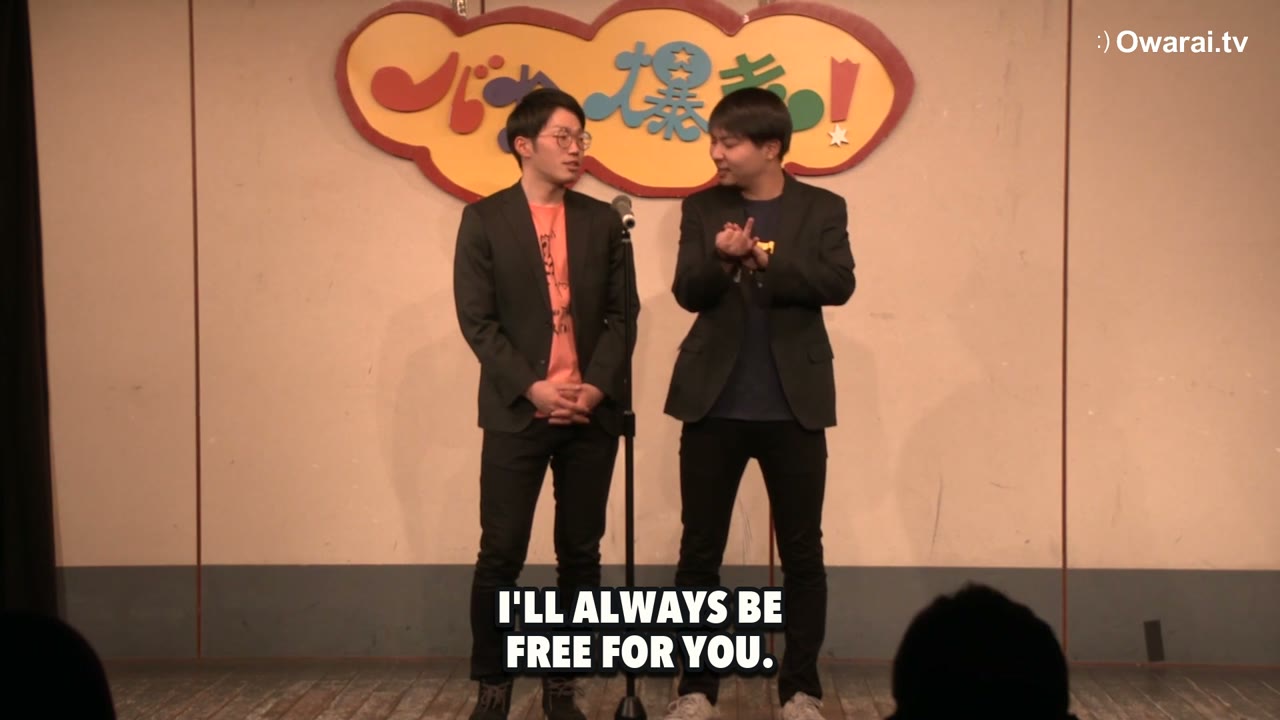
Hayashi of Nagomido recalls going out to eat with a group of eight. Everyone settled in at two tables of four and started talking.
A meal with Hayashi
In this story, Japanese comedian Hayashi of Nagomido recalls a meal with seven other people. Pachinko comes up in the conversation: it’s a Japanese game played for prizes on machines that use small metal balls.
Four at each table
I’m Hayashi from Nagomido.
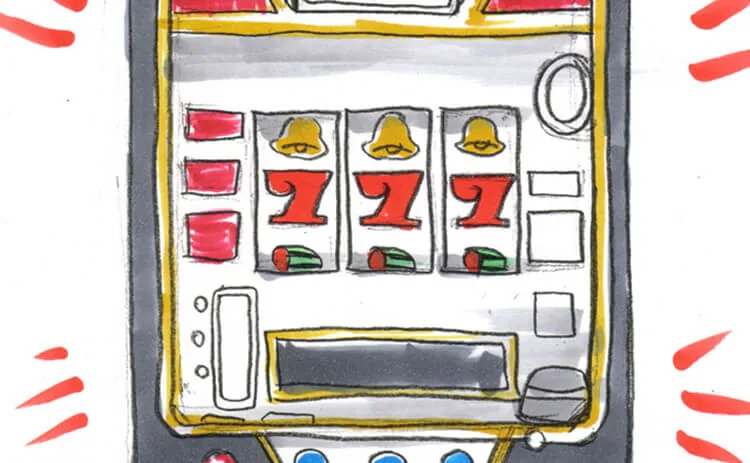
Eight of us went out to eat, and we split into two tables of four. At my table, we were talking about ghosts. Where they showed up, where they didn’t. At the other table, they were talking about pachinko. Which places paid out, which ones didn’t.
Now, one of the guys at my table worked at a pachinko parlor. Someone at the other table asked him:
“Hey, do you get anything at your place?”
The guy had been talking about ghosts, so he said:
“We don’t get anything at our place!”
“Whoa, you can just come right out and say that?”
“Well, we keep little piles of salt by the entrance.”
“So places with salt by the entrance don’t get anything?”
“Nope.”
“And you’re allowed to tell people that?”
“Sure, why not? It’s better if we don’t get any. We’d be in trouble if we did.”
“You might be fine with that, but your manager’s going to have a problem with it.”
“Huh?”
Editor’s note: The wording and the salt
In Japanese, the same verb, deru (出る), can describe ghosts appearing or pachinko machines paying out. The English dialogue leaves “anything” and “any” unspecified to carry that ambiguity.
The little piles of salt are called morijio (盛り塩). Placing them by the entrance to a home or business is a custom associated with warding off evil and bringing good luck.
We use AI as part of how we create our articles.
 The Jump-Rope Test at Hamaron’s Elementary SchoolAt comedian Hamaron’s elementary school, kids worked their way through jump-rope ranks. One of his friends decided to go for “Master”—in second grade.
 Tomoike-san’s shift by the conveyor beltA factory job paid Tomoike-san 8,000 yen a day. His task sounded simple: keep an eye on a machine.
 A Night Out With RockyUeda of Hi-Hi recalls going out for drinks with Rocky Hirao, a fellow comic he’d only recently met.
All stories
A Night Out With RockyUeda of Hi-Hi recalls going out for drinks with Rocky Hirao, a fellow comic he’d only recently met.
All stories