Sato’s Tree-Planting Trip to Malaysia
During his freshman year of college, Sato of Dokidoki Camp spent a month planting trees in Malaysia. The group’s work shirts became part of an informal Japanese lesson, too.
A college trip with Sato
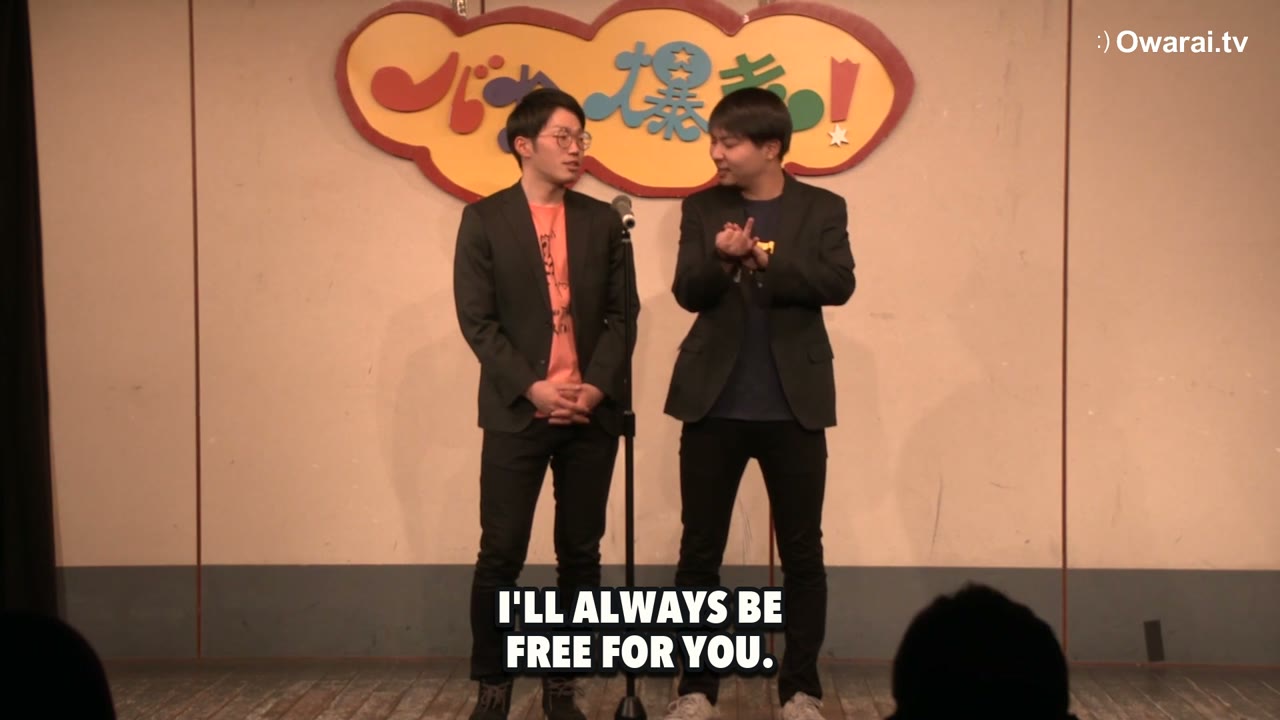
Japanese comedian Sato (佐藤) of Dokidoki Camp (どきどきキャンプ) shared this story about a university project that brought students from Japan together with young people in Malaysia for a month of planting trees.
Trees, T-shirts, and Japanese lessons
I’m Sato from Dokidoki Camp.
When I was a freshman in college, I went to Malaysia for about a month to plant trees. It was a university program, and the idea was, “The planet needs more trees, so let’s go plant some.” There were 20 college students from Japan and 20 young people from Malaysia—about 40 of us, spending a month planting trees.
The young Malaysians were really working at learning Japanese. Apparently, knowing Japanese could help them get jobs in tourism, so it opened up more work opportunities.
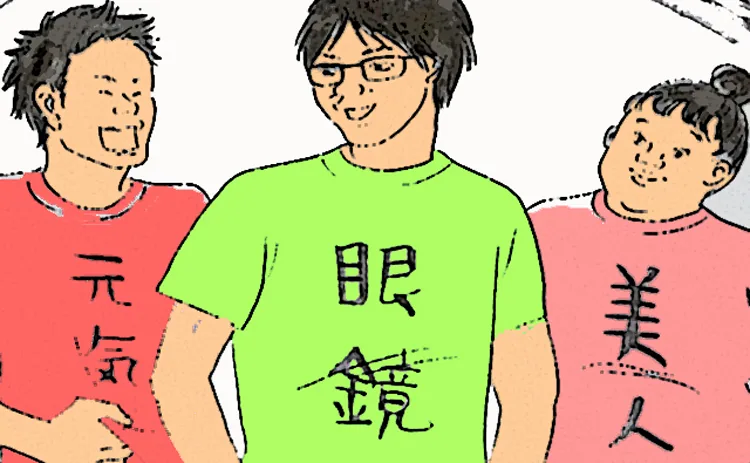
We figured we might as well help them learn a few more words. So we started writing words in Japanese characters on the backs of the T-shirts we wore for work. “Courage,” “Beauty,” “Energy,” “Glasses”—anything would do!
Now, as for the actual tree planting, here’s how it worked on that trip. First, we burned off the vegetation on a mountain to clear the ground. Then we planted trees at regular intervals. By the end of the first half of the month, all 40 of us had finished planting maybe 30 or 40 trees each. The plan for the second half was to clear the next area with another burn, then plant there.
And when I say burn, I mean you actually set the mountain on fire. You run around with a branch burning at one end, setting things alight as you go. You get pretty excited.
My friend—the one wearing the “Energy” shirt—got so excited he just kept going. And the fire spread all the way to the trees we’d spent half a month planting.
We were going, “Whoa! This is bad! This is bad!” Then the 20 young Malaysians came running up from behind us, their faces bright red. And instead of going after “Energy,” they beat me up.
I wasn’t even the one who’d done it…
The fire was put out, and afterward they apologized to me profusely, but…
From the next day on, I walked around with “Falsely Accused” written in Japanese on the back of my T-shirt.
Editor’s note: The words on Sato’s shirt
Sato wrote 濡れ衣 (nureginu), an expression for being blamed for something you didn’t do. Literally, the characters mean “wet clothing”; in Japanese, falsely accusing someone is described as making them “wear” it.
We use AI as part of how we create our articles.